The Jewish Age Harvest part 2: “The Four Phases of Jesus’s Human and Post-Resurrection Existence“
In our last study, we found ourselves at the end of the Jewish Age – the period of time in mankind’s history when God instituted a special relationship with a group of people and offered them blessings if they would keep to a specific set of laws and procedures. These people were the descendants of a faithful follower of God, a man named Abraham; and more specifically, the descendants of one of Abraham’s grandsons, who was named Israel. We examined how these descendants eventually grew into a nation of the same name, Israel, and how, as a nation in general, they were unable to keep these laws and procedures perfectly, as God had required. We also looked into various prophets, who were sent by God to the nation of Israel to proclaim the coming of a great king, or messiah, who would serve not only as a deliverer, but also a judge. Centuries went by, and eventually that messiah did indeed come. The promised messiah, a man named Jesus, was, as we saw in the scriptures, in actuality a spiritual being known as the Word, or the Logos, who took on human form in order to fulfill the prophecies that God had set forth. We further examined the scriptural accounts of how Jesus kept God’s laws and procedures perfectly, in both deed and spirit, and how, although doing so earned him the right to life under God’s justice, he willingly gave himself up to be put to death. Lastly, we examined another aspect to Jesus’s time on earth, in which he went among the people of Israel, searching for those who, although they may not have been able to perfectly keep his Father’s laws and procedures, nonetheless had heart conditions and intellectual mindsets such that they would be willing to recognize their long promised messiah, and give up their all in order to follow him when he called them. We compared this seeking and gathering process by Jesus to the concept of a wheat harvesting, and consequently labeled this period of time as the harvest of the Jewish Age, or the Jewish Age harvest. We ended by lightly touching on the fact that the end of the time of solitary favor to the descendants of Israel was rapidly approaching, which would signify the end of the Jewish Age and the beginning of the following age.
Before we more forward in our studies with that next age, let us take some time to further examine some additional aspects and events of the Jewish Age harvest. Consider the magnitude of the events of this time period, when Jesus fulfilled God’s law, when he accepted the role of king and messiah, when he not only added new insights and understandings to God’s plans and character but in doing so, laid down many new (or at least, clarified) rules for followers. There are so many wonderful and meaningful aspects to this period of time, that it is simply not feasible to cover them all in a few, short studies. However, there are, at least, a few more key aspects that may be worthy of review before moving forward.
In our last study, we spent a significant amount of time evaluating the impact of Jesus’s ministry and death upon both the Jewish people, and the world in general. In this study, we will attempt to consider what the scriptures teach about the impacts of this time period on Jesus himself. Examining the progression that Jesus went through will help lay the foundation for the following age, as well as the ages yet to come. We will focus this study in considering the phases of Jesus’s existence from the time he took on human form as a human baby, until the state he exists in to this present day, and propose that these states fall into four distinct categories, each of which will form a different icon on a different plane of existence on our chart.
To begin with, we previously examined how the Word, or Logos took on human form, to the point of being born by a woman named Mary, in order to fulfill God’s prophecies, as plainly told to us by the Apostle John:
John 1:14 And the Word was made flesh, and dwelt among us, (and we beheld his glory, the glory as of the only begotten of the Father,) full of grace and truth.
The Bible does not give us many details about his life from birth to age 30. We have a few beautiful and important anecdotes, such as Luke chapter 2, when Jesus, as a young boy, was feared lost, but eventually found in the Temple, discussing the scriptures with teachers/doctors, and amazing them with his understanding and insights. However, one aspect of this time period is important to keep in mind. Though there is no verse in the Bible that plainly says “Jesus maintained a perfect life before reaching the age of 30,” the thought is readily supported by the examining scriptures that build upon this conclusion. Consider, for example, the Apostle Paul’s words in Philippians:
Philippians 2:7 But made himself of no reputation, and took upon him the form of a servant, and was made in the likeness of men:
Philippians 2:8 And being found in fashion as a man, he humbled himself, and became obedient unto death, even the death of the cross.
In order for Paul to make the claim that Jesus was “obedient even unto death” implies that throughout his life as a human, which ended in his death, Jesus obeyed and followed the laws set out by his Father. Since these laws were perfect laws, one who could perfectly be obedient to them would, by definition themselves be perfect.
Another example of this conclusion comes from another writing of the Apostle Paul, this one to the Corinthians:
I Corinthians 15:21 For since by man came death, by man came also the resurrection of the dead.
I Corinthians 15:22 For as in Adam all die, even so in Christ shall all be made alive.
These simple words from the apostle contain such a profound meaning and message that we will only lightly touch on these thoughts here, in support of the thought that Jesus, during his time as a human, was perfect. Instead, we will, return to these scriptures, and several others of similar and corroborating thought, as the sole focus subject of future studies in this series. For now, we simply propose that in these scriptures, Paul is laying out a comparison between Adam and Jesus. Picture a scale, of the type with two trays, one on each side, where the goal of balancing the two sides of the scale it to place items of equal weight on both opposing trays.
If you remember, back in the very first study in this series, we examined the account of Adam’s creation, and in particular cited this scripture:
Genesis 1:26 And God said, Let us make man in our image, after our likeness: and let them have dominion over the fish of the sea, and over the fowl of the air, and over the cattle, and over all the earth, and over every creeping thing that creepeth upon the earth.
In that study, we proposed the thought that God creating man “in our image” implied a level of perfection in Adam, which thus led us to create a pyramid icon on “the plane of human perfection” on our chart of God’s plan for mankind. We further considered how that perfection was lost when Adam disobeyed God and that since then, all subsequent ancestors had fallen into imperfection. We also previously considered God’s law and procedures, which he gave, many centuries later, to the descendants of Israel and further considered that the perfect keeping those laws and procedures would justify, or make righteous, a person in terms of God’s justice.
Paul’s words in I Corinthians brings to mind the image of the previously mentioned scale. Adam, on one side, was once considered perfect, and had thrown the scale into imbalance through sin and disobedience. To regain that balance would require another perfect human being. Jesus, having been faithful unto death as noted in the Philippians verses, would thus, in Paul’s equation, fill the other side to the equation Paul lays out. Thus it was that, in our last study, we added a new pyramid icon on the plane of human perfection (which we labeled “g”), like Adam’s icon (which we had previously labeled “a”), to represent Jesus’s human life until he reached age 30. In this, Jesus’s existence from birth to age 30, remaining faithful and obedient to all of God’s laws (perfect), we have the first of the four states of Jesus’s life that we will add to our chart.
Age thirty had long been important to the Jewish people. When God first established his laws and procedures with the early descendants of Israel, male members of the descendants of one of Israel’s sons, Levi, were expected to begin service as priests at age thirty:
Numbers 4:1 And the LORD spake unto Moses and unto Aaron, saying,
Numbers 4:2 Take the sum of the sons of Kohath from among the sons of Levi, after their families, by the house of their fathers,
Numbers 4:3 From thirty years old and upward even until fifty years old, all that enter into the host, to do the work in the tabernacle of the congregation.
The descendants of particular sons of Israel were often referred to as “tribes” of that particular son; thus, the “descendants of Levi” were often referred to as “the tribe of Levi” Beginning ones service at the age of thirty was not limited to the tribe of Levi. As can be seen in further verses in Numbers, this expectation was also given to several other of the tribes of Israel regarding many other duties of service, such as in verses 23, 30, 35 and 39.
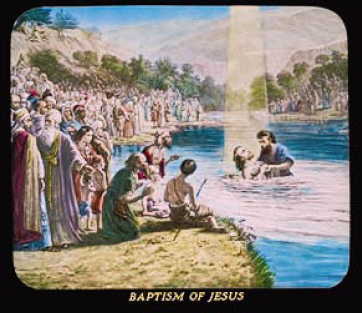
The Gospel of Luke records that upon reaching the age of thirty, Jesus, having determined that the appropriate time had come, presented himself for consecration to his Father’s will through the outward sign of baptism:
Luke 3:21 Now it came to pass, when all the people were baptized, that, Jesus also having been baptized, and praying, the heaven was opened,
Luke 3:22 and the Holy Spirit descended in a bodily form, as a dove, upon him, and a voice came out of heaven, Thou art my beloved Son: in thee I was well pleased.
Luke 3:23 And Jesus himself, when he began to teach, was about thirty years of age, being the son (as was supposed) of Joseph, the son of Eli,
Interestingly, of the four books of the Bible usually referred to as the Gospels (Matthew, Mark, Luke and John), the book of Luke is the only Gospel to record this detail of Jesus being “about thirty years of age”. Jesus’s baptism is described in the book of Matthew, for example, but his age is not mentioned:
Matthew 3:16 And Jesus, when he was baptized, went up straightway out of the water: and, lo, the heavens were opened unto him, and he saw the Spirit of God descending like a dove, and lighting upon him:
Matthew 3:17 And lo a voice from heaven, saying, This is my beloved Son, in whom I am well pleased.
In these accounts, as well as accounts in John chapter 2 and Mark chapter 1, we see Jesus giving himself in baptism to God. Baptism was, and still is, as stated previously, a symbol of consecration to God. By this act, Jesus was giving his all to his Father’s will. God accepted this act of consecration on His son’s part by pouring forth His spirit to His son. God evidently wanted to stress this act of acceptance, as well as the outpouring of His spirit to His son, to the assembled people. It was of such importance that the people understood that Jesus was accepted by God and blessed with God’s own power, His Holy Spirit, that God caused a physical manifestation “like a dove” that descended upon Jesus. Immediately after this receipt of his Father’s spirit, Jesus departed for the wilderness, and spent forty days there in contemplation (as well as enduring temptation laid upon him by the adversary; the examination of these accounts could each form studies in themselves).

For this study, however, we would like to call out the change that occurred in Jesus after his baptism and receipt of the spirit of God. Although he had maintained a level of knowledge of God and his laws prior to his baptism, it was only after his receipt of the Holy Spirit that he began to gather his disciples and followers, and began his ministry. John 1, for example, chronicles the gathering of his disciples. It was not until receiving the Holy Spirit at his baptism that he began to teach, deliver his parables and prophecies, and begin the work of gathering together those whom he found faithful from among the Jewish people.
The term “beget” or “begotten” refers to a beginning. This phase of Jesus’s life, the phase of his ministry and his harvest work, began with his receipt of the Holy Spirit. With these thoughts in mind, this phase of Jesus’s life is often referred to as “spirit begettal” – literally a starting or beginning of a new phase of existence marked, or started by, the receipt of the Holy Spirit. This state seems important enough that we will add a new plane of existence to our chart titled “Plan of Spirit Begettal”, which we will label “M”. We will also add a new pyramid icon on this plane to represent Jesus, from the time of his receipt of the Holy Spirit at his baptism to the time of his death some three and a half years later. This icon, which we will label with an “h”, marks the second of the four states of Jesus’s existence that we will consider in this study.
Matthew chapter 27, Mark chapter 15, Luke chapter 23 and John chapters 18 and 19 chronicle how Jesus allowed himself to be taken by those who considered him an enemy, and ultimately put him to death. As one might expect, Jesus’s death marked the end of his human life. However, all four Gospel accounts also chronicle the miraculous events of the resurrection of Jesus from the grave. John chapter 20, for example, begins with Mary Magdalene, who was a friend and follower of Jesus during his time as a human, visiting the location where Jesus’s body had been put to rest. When she arrived, however, she found that the large stone that had blocked the entrance to Jesus’s tomb had been moved aside.
John 20:1 The first day of the week cometh Mary Magdalene early, when it was yet dark, unto the sepulchre, and seeth the stone taken away from the sepulchre.
No doubt in a state of distress, she hurried to inform, and bring back to the tomb, a number of Jesus’s apostles, including Peter, and “the disciple whom Jesus loved”, who is generally thought to have been John. When they arrived back at the tomb, they found it empty:
John 20:2 Then she runneth, and cometh to Simon Peter, and to the other disciple, whom Jesus loved, and saith unto them, They have taken away the LORD out of the sepulchre, and we know not where they have laid him.
John 20:3 Peter therefore went forth, and that other disciple, and came to the sepulchre.
John 20:4 So they ran both together: and the other disciple did outrun Peter, and came first to the sepulchre.
John 20:5 And he stooping down, and looking in, saw the linen clothes lying; yet went he not in.
John 20:6 Then cometh Simon Peter following him, and went into the sepulchre, and seeth the linen clothes lie,
The apostles left the tomb after that, leaving Mary still in a state of distress at the now empty tomb. Probably thinking herself alone again, Mary eventually became aware of a presence behind her, as she peered into the tomb. Turning, she saw someone standing there, who eventually revealed himself to be Jesus.
John 20:14 And when she had thus said, she turned herself back, and saw Jesus standing, and knew not that it was Jesus.
John 20:15 Jesus saith unto her, Woman, why weepest thou? whom seekest thou? She, supposing him to be the gardener, saith unto him, Sir, if thou have borne him hence, tell me where thou hast laid him, and I will take him away.
John 20:16 Jesus saith unto her, Mary. She turned herself, and saith unto him, Rabboni; which is to say, Master.
Mary did not recognize the master whom she loved so dearly at first, until Jesus gently called her such that she recognized him. This is a significant detail. While all branches of Christianity believe that Jesus was resurrected from the dead (hence the title “Christians”, for it would do little good to believe in or follow a dead master), there are differences between different branches of Christianity regarding Jesus’s nature following his resurrection. Bible Students tend to interpret the scriptural accounts of Jesus’s existence after his resurrection, until a certain point some days later, as indicating that Jesus was resurrected as a spiritual being. Jesus’s next words to Mary, according to the account in John are:
John 20:17 Jesus saith unto her, Touch me not; for I am not yet ascended to my Father: but go to my brethren, and say unto them, I ascend unto my Father, and your Father; and to my God, and your God.
Here, Jesus indicates to Mary that he is in a transitional state. He expects that he will soon “ascend to his Father”. Until this time, God existed in a unique position among all entities. Throughout all the countless ages of existence, He was the only being who had “life in himself.” This concept of “life in oneself” is equivalent to the concept of immortality. This concept was spoken of earlier by Jesus himself, as also recorded in the book of John:
John 5:25 Verily, verily, I say unto you, The hour is coming, and now is, when the dead shall hear the voice of the Son of God: and they that hear shall live.
John 5:26 For as the Father hath life in himself; so hath he given to the Son to have life in himself;
It is important to note that Jesus is saying “the hour is coming” when the Son (Jesus) would be given this “life in itself” just as God, his Father had. This implies that, at the time of Jesus’s words, he did not possess this quality yet. However, Jesus’s words here are important to our current considerations for two reasons: first, they speak to Jesus’s affirmation of a quality of God’s existence, namely His immortality, and second, that Jesus expected that same quality to be granted to him in the not-to-distant future.
Before continuing, let us take a few moments to consider two different terms that are often incorrectly equated to one another, but, upon investigation, are really quite importantly distinct. These two terms are “everlasting life” and “immortality”. “Everlasting life” refers to an existence will continue as long as certain conditions are maintained. Consider the concept of justification or righteousness that was granted to one of the descendants of Israel, who could perfectly keep God’s law. In our previously studies, we examined the scripture from Leviticus, where this promise of life in return for perfect obedience was given:
Leviticus 18:4 Ye shall do my judgments, and keep mine ordinances, to walk therein: I am the LORD your God.
Leviticus 18:5 Ye shall therefore keep my statutes, and my judgments: which if a man do, he shall live in them: I am the LORD.
The condition that God is specifying, is that life will be granted to those who perfectly keep His law, as long as the individual continues to perfectly keep His law. This implies that disobedience will result in that life being taken away. In our very first study, we also saw this concept with Adam and Eve. They were granted continued life in their perfect garden, until they disobeyed God, and became subject to death. In both of these cases, the term “everlasting life” seems most appropriate – continued life, but under conditions; and if those conditions are failed at being kept, that life can and will be discontinued.
The existence applied to spiritual beings such as angels is generally thought to be one of “everlasting life” as well. The scriptures speak of angels existing even prior to mankind’s creation. In Genesis 3, God places an angel to guard the gates of the garden after Adam and Eve’s eviction. Paul refers to the experience of mankind as a “spectacle for the angels”:
1 Corinthians 4:9 For I think that God hath set forth us the apostles last, as it were appointed to death: for we are made a spectacle unto the world, and to angels, and to men.
Although highly symbolical in places, the book of Revelation foretells the destruction of the fallen angels, including Lucifer, or the adversary, thereby confirming that spiritual beings have an existence that can be terminated:
Revelation 20:10 And the devil that deceived them was cast into the lake of fire and brimstone, where the beast and the false prophet are, and shall be tormented day and night for ever and ever.
Immortality, or “life in itself” is quite a different concept. Think about those terms for a moment – “life in itself”. A being who has this quality requires nothing more than oneself to maintain life, or a continued existence. This is certainly the case with God, who had no beginning and has no end:
Psalm 90:2 Before the mountains were brought forth, or ever thou hadst formed the earth and the world, even from everlasting to everlasting, thou art God.
Immortal beings are, by their very nature “death-proof” – there is no circumstance under which their continued existence could even be put into question. Bible Students often refer to beings who possess this level of immortality as possessing “the divine nature”.
Returning to Jesus’s words to Mary in John 20:17, Jesus told Mary that he was going to “ascend to his Father.” There are two important implications here. First, if he was “ascending”, this implies that Jesus was expecting to be elevated to a greater level of existence than he had at the time he was speaking. Second, he was expecting to be elevated to the level of his Father; meaning, as we have just considered, the level of immortality, or “the divine nature”. This means, at the time of his resurrection and of speaking to Mary, he did not yet possess this nature.
Mary’s inability to recognize the resurrected master who she loved so dearly seems to indicate that Jesus was not simply resurrected in the same body that had died. While it is true that Jesus had called forth others from the dead, such as his friend Lazarus (in John 11:38-44) and the daughter of a man named Jairus (in Mark 5:22-43, and also Luke 8:40-48), in these cases, the individuals were resurrected in the same bodies that had died, and were immediately recognized by their loved ones. This seems to not be the case here. In fact, this not the only time that Jesus appeared to those who, during his life, he was very close to, yet was not recognized by them.
Luke chapter 24 outlines a further time, shortly after Mary’s encounter with Jesus, references above, when Jesus appeared to a group of his disciples and followers. Keep in mind that these were people who had traveled with Jesus for years. They had given up their jobs, their homes, in some cases their friends and families to follow this man who they believed to be their long awaited king and messiah. Think, perhaps of your own family or friends. Picture them going away on travel for a weekend or so, and returning. Is it practical to think you would not recognize them? Yet, this is exactly what the Luke account tells us:
Luke 24:15 And it came to pass, that, while they communed together and reasoned, Jesus himself drew near, and went with them.
Luke 24:16 But their eyes were holden that they should not know him.
John chapter 21 depicts another encounter between Jesus and the disciples when they did not recognize their master. Some of the disciples decided to go fishing, and were having no success. They became aware of a man on the shore, and at first, did not understand that this man was, in fact, Jesus, manifesting himself temporarily again in a form that they could see:
John 21:1 After these things Jesus shewed himself again to the disciples at the sea of Tiberias; and on this wise shewed he himself.
John 21:2 There were together Simon Peter, and Thomas called Didymus, and Nathanael of Cana in Galilee, and the sons of Zebedee, and two other of his disciples.
John 21:3 Simon Peter saith unto them, I go a fishing. They say unto him, We also go with thee. They went forth, and entered into a ship immediately; and that night they caught nothing.
John 21:4 But when the morning was now come, Jesus stood on the shore: but the disciples knew not that it was Jesus.
While this lack of recognition until called to do so certainly does not definitively demonstrate that Jesus was resurrected as a spirit being, it does seem to support the thought that Jesus was not simply resurrected in the same body that had died some few days earlier; else no doubt his friends and followers would have recognized him. The ability to seemingly change appearance and not be recognized until desired does, however, seem to be consistent with Old Testament accounts of angels and spirit beings who appear to mankind.
There are also accounts about Jesus, after his resurrection, coming and going in a manner that does not fit the ways we might expect a human to appear, but does fit with the expectations for spirit beings who enter into locations and make themselves visible to humans. One such account is in John chapter 20, when Jesus appears among his disciples, in a closed room:
John 20:19 Then the same day at evening, being the first day of the week, when the doors were shut where the disciples were assembled for fear of the Jews, came Jesus and stood in the midst, and saith unto them, Peace be unto you.
Luke chapter 24 outlines an incident of Jesus abruptly disappearing from sight. After traveling and talking with his followers, who did not recognize him at the time, Jesus vanishes from sight soon after his followers realized his identity:
Luke 24:31 And their eyes were opened, and they knew him; and he vanished out of their sight.
If you look up the word “vanished” in Strong’s concordance, you will see only two references to the word; once in Hebrew, in the book of Jeremiah, and once here in the Luke scripture. However, Strong’s does not list a Greek word reference. Looking at another translation of this same verse, Wilson’s Diaglott, which is sometimes used to see a more literal translation of the Greek-to-English New Testament, translates the verse as follows:
Luke 24:31 Of them and were opened the eyes, and they knew him; and he disappeared from them.
These two translations seem to carry the thought of an abruptness to Jesus’s vanishing, and not, perhaps, that of a person leaving a group and walking away.
As we have examined in previous studies, spirit beings did possess the power to temporarily take on human form and interact with humans. Genesis cites several incidents, such as the angels who “kept not their own estate” and took on human form prior to the Flood (in Genesis chapter six), the angel with whom Jacob wrestled in order to obtain a blessing (in Genesis chapter 32), and the angels who visited Lot before the destruction of his city (in Genesis chapter nineteen). Jesus also took on human form during these periods of interaction, even going so far on one occasion as to duplicate the wounds he received on the cross, in order to interact with certain of his followers who, unlike Mary, were struggling to believe their master had in fact been resurrected from death.
Perhaps Jesus took this extra step of duplicating his wounds and offering these extra proofs of his resurrection to his disciples because he knew he would soon transition to yet another state. He perhaps knew that his disciples would need to carry on, on their own, and would need to have every faith in their master and the mission he would give to them, in order to carry out the important work that was soon about to unfold.
Most Christians are familiar with the account of Thomas, and even many of those who are not of the Christian faith understand and perhaps use the term “doubting Thomas.” One of the disciples, Thomas, had a very difficult time believing the accounts of Jesus’s resurrection, going so far as to make the following statement:
John 20:25 The other disciples therefore said unto him, We have seen the LORD. But he said unto them, Except I shall see in his hands the print of the nails, and put my finger into the print of the nails, and thrust my hand into his side, I will not believe.
Previously, we cited a verse from John 20 which describes Jesus appearing suddenly in a closed room. That occurrence is from this same account. Eight days after Thomas made this statement, Jesus appeared to Thomas, and other followers in a closed room. This time, he took on a form which bore the wounds cited by Thomas as necessary for his belief:
John 20:26 And after eight days again his disciples were within, and Thomas with them: then came Jesus, the doors being shut, and stood in the midst, and said, Peace be unto you.
John 20:27 Then saith he to Thomas, Reach hither thy finger, and behold my hands; and reach hither thy hand, and thrust it into my side: and be not faithless, but believing.
This does not mean that Jesus was necessarily in the body that had been put to death days earlier. Bible Students interpret these verses as Jesus, now a spirit being, manifested himself in a body that duplicated the wounds he had received on the cross for the specific purpose of instilling this belief in Thomas, and perhaps stopping further dissension and doubt among his disciples as to the reality of his resurrection.
Before moving on, Jesus uses this incident to deliver a key lesson about faith to both his disciples and, centuries later, to us as well. After being allowed to recognize her lord, Mary did not require any further proofs to his identity. Her heart was such that she recognized him, and rejoiced at his resurrection. Thomas, however did not believe even the words of his own trusted friends, the other disciples. Although “proving all things” is in general a positive characteristic in not only those who would follow our Lord (as the Apostle Paul reminds us in 1 Thessalonians 5:21), Jesus response to Thomas and the other disciples reminds us that faith is just as important to our Lord, and his words are of great comfort and encouragement to those of us now, so many years after these events, who still seek to follow and honor our Lord:
John 20:29 Jesus saith unto him, Thomas, because thou hast seen me, thou hast believed: blessed are they that have not seen, and yet have believed.
Again, while there is no scripture that seems to come right out and bluntly say “Jesus was raised as a spirit being who then manifested himself in human form, on occasion, to his followers and disciples before ascending into a further state of existence”, the above-cited scriptures seem to show the accounts of Jesus’s interactions as consistent with those between spirit beings and humans. We will return to this concept in future studies, and at that time, examine why we consider this point so crucial and offer more thoughts in its support and implications. For now, we conclude this look at the third form Jesus took, that of a spirit being after his resurrection, but before his final state, by adding a new plane of existence to our table. This plane we will title “the plane of spirit beings”, and label it with an “L”. We place this plane of existence higher than our previous planes, and place another pyramid icon here, this one labeled “i”, to represent Jesus, now resurrected as a spirit being.
According to the book of Acts, chapter 1, forty days pass in this manner, between Jesus’s resurrection and Jesus’s ascension to the forth and final state we will consider in this study. Acts 1:3, in particular, cites the time period as forty days:
Acts 1:3 To whom also he shewed himself alive after his passion by many infallible proofs, being seen of them forty days, and speaking of the things pertaining to the kingdom of God:
The Acts account continues with the apostles again assembled together with their resurrected master. After some final brief words to his apostles, a miraculous event happens. They witness their master ascend “out of their sight”:
Acts 1:9 And when he had spoken these things, while they beheld, he was taken up; and a cloud received him out of their sight.
This same account is referenced in Mark chapter 16:
Luke 16:19 So then after the Lord had spoken unto them, he was received up into heaven, and sat on the right hand of God.
This account adds the thought that Jesus had ascended to a higher state of being, one where he was now at the “right hand” of his Father. Jesus had now ascended to the divine nature; a state of immortality and glory, as opposed to the everlasting life he could have maintained in his human state by staying faithful to the law. Again, we will return to this concept in further studies, and examine it more in depth, but for now, we add one final plane of existence to our chart, this one titled “The Plane of Glorious Divine Spirit Beings”, and labeled K. To be at the right hand of the Supreme Creator implies a level of existence higher than the angels, higher even than the state Jesus possessed in his prehuman existence as the Word or the Logos. Jesus had proven himself faithful to his Father, to the point of entrusting his entire existence to Him. Through temptation; through indignities and pain and sorrow; Jesus never once wavered from his loyalty and love to his Father and His plans and His ways. Thus, he was granted with the ultimate of rewards – an immortal existence previously only reserved for God Himself. We close our examination on these four states of Jesus’s human and post-human existence with the addition of one more pyramid icon to our chart – this one we place on the newly added plane K. We title the new icon “Lord Jesus, Divine Spirit Being”, and label this icon k.
With these new planes, and these new icons, our updated chart now appears like this:

- KEY TO OUR PLAN SO FAR
- AGES
- A – First Dispensation (Creation to Flood)
- D – Patriarchal Age
- E – Jewish Age
- Harvest of the Jewish Age (29 AD to 70 AD)
- PLANES
- N – Plane of Human Perfection, Friendship, or Tentative Justification
- P – Plane of Typical Justification
- R – Plane of Depraved Mankind
- M – Plane of Spirit Begettal (new addition)
- L – Plane of Spirit Beings (new addition)
- K – Plane of Glorious Divine Spirit Beings (new addition)
- OBJECTS
- a – Adam, created perfect (Genesis 1:27)
- b – Mankind, Degraded by Sin (Psalms 51:5, Romans 3:9-12)
- c – Abraham, Isaac and Jacob, Justified by Faith (Acts 7:32, James 2:23, Galatians 3:6)
- d – World of Mankind Unjustified (Romans 3:9-12)
- e – Israel’s Typical Justification (Hebrews 10:1,4)
- f – Time of Trouble, Fire of Trial on Fleshly Israel (Luke 3:17, 1 Thessalonians 2:14-16)
- g – Jesus, a Perfect Man (John 1:14, Hebrews 2:9,16)
- Cross on P – Redemption of the Jews (Galatians 3:13, Luke 1:68,69, Galatians 4:4,5)
- Cross on N – Ransom for All (1 Timothy 2:4-6, Romans 5:15-19, 1 Corinthians 15:21,22, 1 John 2:2)
- h – Jesus, a Spirit Begotten New Creature (John 1:32, Luke 3:21-23, Hebrews 2:10, 17, 18) (new addition)
- i – Jesus, a Spirit Being before Pentecost (Hebrews 5:8,9; Ephesians 1:20-23; 1 Timothy 3:16) (new addition)
- k – Lord Jesus, Divine Spirit Being (Acts 3:19-21; Colossians 1:18, Hebrews 8:1) (new addition)
- AGES
Covering Jesus’s four states after becoming human – from perfect human, to a spirit begotten being at his consecration and baptism, to a resurrected form as a spirit being, to finally a fully ascended divine and immortal glorified spirit being, took quite some length of consideration, even though we admittedly only briefly touched on some extremely important concepts. In our next study, we will examine the events that led to the closing of the Jewish Age harvest period. We will begin to examine, in closer detail, the Holy Spirit, and its importance to those who wish to follow our Lord Jesus and understand God and His plan. We will cover the events following Jesus’s ascension and examine the scriptural account of the disciples receiving the Holy Spirit. We will review Jesus’s final instructions to his followers, and examine the implications of those instructions, which carry forward even to us, in this present day.
Posts in the “God’s Plan for Mankind” Study
- A Study in God’s Plan for Mankind – Study 1: In the Beginning
- A Study in God’s Plan for Mankind – Study 2: The World That Was
- A Study in God’s Plan for Mankind – Study 3: The Patriarchal Age part 1
- A Study in God’s Plan for Mankind – Study 4: The Patriarchal Age part 2
- A Study in God’s Plan for Mankind – Study 4a: Jacob’s Hip
- A Study in God’s Plan for Mankind – Study 5: The Jewish Age part 1: The Children of Israel
- A Study in God’s Plan for Mankind – Study 6: The Jewish Age part 2: Typical Justification and Life
- A Study in God’s Plan for Mankind – Study 7: The Jewish Age part 3: Judges, Kings and Prophecies
- A Study in God’s Plan for Mankind – Study 8 – The Jewish Age Harvest part 1: Prophecies Fulfilled
- A Study in God’s Plan for Mankind – Study 9 – The Jewish Age Harvest part 2: The Four Phases of Jesus’s Human and Post-Resurrection Existence
- A Study in God’s Plan for Mankind – Study 10 – Beginnings, Endings and Overlaps
- A Study in God’s Plan for Mankind – Study 11 – The Gospel Age part 1: Justification by Faith
- A Study in God’s Plan for Mankind – Study 12 – The Gospel Age part 2: The Promise of the Restitution of All Things
- A Study in God’s Plan for Mankind – Study 13 – The Gospel Age part 3: The Cost of Mankind’s Ransom
- A Study in God’s Plan for Mankind – Study 13a – The Gospel Age part 3a: Faith: The Work of a Lifetime
- A Study in God’s Plan for Mankind – Study 14 – The Gospel Age part 4: The High Calling
- A Study in God’s Plan for Mankind – Study 15 – The Gospel Age part 5: God’s Plan and the Permission of Evil
- A Study in God’s Plan for Mankind – Study 16 – The Gospel Age part 6: The Great Company
- A Study in God’s Plan for Mankind – Study 17 – The Gospel Age part 7: The Gospel Age in Summary
- A Study in God’s Plan for Mankind – Study 18 – The Gospel Age Harvest part 1: An Introduction to the Concept of the Harvest at the End of the Gospel Age
- A Study in God’s Plan for Mankind – Study 19 – The Gospel Age Harvest part 2: The Lord’s Return and Presence in the Gospel Age Harvest
- A Study in God’s Plan for Mankind – Study 20 – The Gospel Age Harvest part 3: The Completion of the Church Class
Further Readings and References
- In the article “What is Man?”, Pastor Charles Russell considers the differences between the human, spiritual and divine natures that were touched on here. Following the link will take you to a printing of the entire publication in which this article appeared; search for the text “What is Man” to find the article (R328-R330)
- The pictures in this study are from the article “The Baptism of Jesus” of the greater work The Photo-Drama of Creation. This book contains many other rich illustrations as well as accompanying articles and other faith-inspiring reflections on our wonderful God and His plan for mankind.
- For a much more in-depth examination of Jesus’s post-resurrection appearances, the Chicago Bible Students have posted a two part look into the scriptural accounts of these occurrences. Part one can be found here. Part two can be found here.
- The topic of the differences between human, spirit, and divine natures is covered in study ten of the larger examination of God’s plan for mankind, outlined in great detail in The Divine Plan of the Ages.
- (Please note that although some of these links will take you to the Chicago Bible Students online bookstore, where physical copies of these books may be purchased, each of the books may also be downloaded from the store, free of charge, with no obligation to provide any personal information. Simply click under the description of each item to find the download link)
 State College Bible Students