John 1:29 The next day John seeth Jesus coming unto him, and saith, Behold the Lamb of God, which taketh away the sin of the world.
I Corinthians 5:7 Purge out therefore the old leaven, that ye may be a new lump, as ye are unleavened. For even Christ our passover is sacrificed for us:
Luke 22:19 And he took bread, and gave thanks, and brake it, and gave unto them, saying, This is my body which is given for you: this do in remembrance of me.
Before we begin our study, let us take a few moments to consider a few experiences that may, perhaps, be common across many of mankind. First, consider a time in your life when you were put in a position of having to say good-bye to a friend or loved one; in particular, someone that you not only loved, but possessed a sense of responsibility toward. When in this position, one may find themselves tailoring their words and messages toward those thoughts that were deemed especially important; those messages that were meant to be impressed upon the other person or party. Often times, a parent may take this opportunity to try to express their concern with a departing child with expressions of concern, such as “remember to take a coat” or “remember to drive carefully.”. Although perhaps trite, these expressions come from a genuine concern for the fundamental concern for the beloved departing child.
Consider also a time in your life when you knew events were rapidly approaching that were the culmination of a series of events that had been a long time in development. Further refine your thoughts to a time when you understood the outcome of the events rested, in large part, on you. Still further, the outcomes of the events, that so heavily relied on you, had a profound effect on those around you, including those you loved most dearly; a time when failure on your part would have dire and catastrophic impacts on the very people you were trying to help or support.
Lastly, add another aspect to your considerations. Think about a time when you were actively trying to do good; in particular, an effort that you were approaching with the best of intentions; an effort that you invested much of your time, resources, maybe even a great portion of your life to; all with the intention of serving the good of others. Now consider a time when that effort was not understood by even those closest to you. Although your dearest friends and loved ones may not have actively prevented or condemned your efforts, but perhaps because they were wrapped up in their own efforts or priorities, they did not react to your efforts in a fully appreciative manner. Further, your efforts, although clearly well intentioned and beneficial to others, were actively condemned by many to the point where others may have considered you so wrong as to be an enemy.
All these emotions and more were no doubt being profoundly and keenly experience by our Lord Jesus, as the Jewish month of Nisan continued on toward the observation of the Passover. Having declared himself to be Israel’s long awaited and prophesied king and messiah some short time earlier, the religious rulers of the Jewish people did not recognize or accept their king, and in fact, during the time we enter into our study’s considerations, this same leadership felt so angered at Jesus’s claims, that they had begun to actively plan his death:
Luke 22:1 Now the feast of unleavened bread drew nigh, which is called the Passover.
Luke 22:2 And the chief priests and scribes sought how they might kill him; for they feared the people.
The Passover was an important part of the Jewish faith. Many centuries before the time of Jesus, before even the time when Israel was a nation, a follower of God, named Abram, who was later renamed Abraham, was given a command by God:
Genesis 12:1 Now the LORD had said unto Abram, Get thee out of thy country, and from thy kindred, and from thy father’s house, unto a land that I will show thee:
Genesis 12:2 And I will make of thee a great nation, and I will bless thee, and make thy name great; and thou shalt be a blessing:
Genesis 12:3 And I will bless them that bless thee, and curse him that curseth thee: and in thee shall all families of the earth be blessed.
Abraham was chosen by God, because of his great faith and devotion to God. Because of that great faith, Abraham did indeed follow God’s commandment and move his family. After Abraham died, the title of patriarch, or leader, of his household passed onto his son Isaac; after which, the leadership role in turn passed to Issac’s son, Jacob, who was later renamed Israel. During Jacob’s time, a great famine spread across the land, which forced Jacob’s household to move, with God’s permission, into the land of Egypt.
Genesis 46:1 And Israel took his journey with all that he had, and came to Beersheba, and offered sacrifices unto the God of his father Isaac.
Genesis 46:2 And God spake unto Israel in the visions of the night, and said, Jacob, Jacob. And he said, Here am I.
Genesis 46:3 And he said, I am God, the God of thy father: fear not to go down into Egypt; for I will there make of thee a great nation:
Genesis 46:4 I will go down with thee into Egypt; and I will also surely bring thee up again: and Joseph shall put his hand upon thine eyes.
Genesis 46:5 And Jacob rose up from Beersheba: and the sons of Israel carried Jacob their father, and their little ones, and their wives, in the wagons which Pharaoh had sent to carry him.
Genesis 46:6 And they took their cattle, and their goods, which they had gotten in the land of Canaan, and came into Egypt, Jacob, and all his seed with him:
Genesis 46:7 His sons, and his sons’ sons with him, his daughters, and his sons’ daughters, and all his seed brought he with him into Egypt.
During their time in Egypt, Jacob/Israel’s family and household grew in size and influence, which caused many of the native Egyptians felt threatened. Over time, the Egyptians placed an increasingly oppressive series of burdens on the descendants of Israel, to the point that their lives in Egypt became very difficult. Eventually, God made the decision that the time had come for the descendants of Israel to leave Egypt and migrate to the land in which he intended them to dwell. There, they would develop into a nation in their own right.
However, a problem arose with this plan, in that the Egyptian nation had grown dependent on the descendants of Israel and the work they were performing. Picture a country today, and how the economy would be affected if a significant portion of the population of that country simply left. Picture how that would affect the ability to maintain commerce, infrastructure, needed services, and other aspects of the culture and nation as well. Even though the Egyptian nation, in general, treated the descendants of Israel in an unkind and unfair manner, the nation still did not want to lose them and the contributions the descendants of Israel made to Egypt, however unfairly those contributions were levied upon them. As a result of this dependency, Egypt’s leadership, including its ultimate ruler Pharaoh, refused to allow the descendants of Israel to leave Egypt.
Because of this refusal, God allowed a series of plagues to be visited on Israel. Exodus chapters seven through twelve outline these plagues, which included swarms of flies, an epidemic of sores and boils, a corruption of Egypt’s water supply, and a dramatic, days-long perpetual darkness. During each of these plagues, Pharaoh initially agreed to allow the descendants of Israel to depart, but once the effects of the current plague were relieved, he repeatedly changed his direction, and instead refused to allow the descendants of Israel to leave Egypt. Exodus chapter eleven, then, describes a final, terrible plague that would come upon Egypt:
Exodus 11:4 And Moses said, Thus saith the LORD, About midnight will I go out into the midst of Egypt:
Exodus 11:5 And all the firstborn in the land of Egypt shall die, from the first born of Pharaoh that sitteth upon his throne, even unto the firstborn of the maidservant that is behind the mill; and all the firstborn of beasts.
Exodus 11:6 And there shall be a great cry throughout all the land of Egypt, such as there was none like it, nor shall be like it any more.
Exodus 11:7 But against any of the children of Israel shall not a dog move his tongue, against man or beast: that ye may know how that the LORD doth put a difference between the Egyptians and Israel.
Note that, as in the previous plagues, God’s words specifically allows the descendants of Israel to remain unaffected by the various plagues. This final, terrible plague would be no exception to this; however, Exodus chapter twelve describes a relatively elaborate and specific set of instructions which would allow the descendants of Israel to be spared from the effects of this final plague.
Exodus 12:1 And the LORD spake unto Moses and Aaron in the land of Egypt saying,
Exodus 12:2 This month shall be unto you the beginning of months: it shall be the first month of the year to you.
Exodus 12:3 Speak ye unto all the congregation of Israel, saying, In the tenth day of this month they shall take to them every man a lamb, according to the house of their fathers, a lamb for an house:
Exodus 12:4 And if the household be too little for the lamb, let him and his neighbor next unto his house take it according to the number of the souls; every man according to his eating shall make your count for the lamb.
Exodus 12:5 Your lamb shall be without blemish, a male of the first year: ye shall take it out from the sheep, or from the goats:
Exodus 12:6 And ye shall keep it up until the fourteenth day of the same month: and the whole assembly of the congregation of Israel shall kill it in the evening.
Exodus 12:7 And they shall take of the blood, and strike it on the two side posts and on the upper door post of the houses, wherein they shall eat it.
Exodus 12:8 And they shall eat the flesh in that night, roast with fire, and unleavened bread; and with bitter herbs they shall eat it.
Exodus 12:9 Eat not of it raw, nor sodden at all with water, but roast with fire; his head with his legs, and with the purtenance thereof.
Exodus 12:10 And ye shall let nothing of it remain until the morning; and that which remaineth of it until the morning ye shall burn with fire.
Exodus 12:11 And thus shall ye eat it; with your loins girded, your shoes on your feet, and your staff in your hand; and ye shall eat it in haste: it is the LORD’s passover.
Exodus 12:12 For I will pass through the land of Egypt this night, and will smite all the firstborn in the land of Egypt, both man and beast; and against all the gods of Egypt I will execute judgment: I am the LORD.
Exodus 12:13 And the blood shall be to you for a token upon the houses where ye are: and when I see the blood, I will pass over you, and the plague shall not be upon you to destroy you, when I smite the land of Egypt.
God’s commandment to the descendants of Israel to specially prepare a lamb, kill it, and sprinkle the blood of the lamb on the doorposts of their home, was the mechanism by which God caused this final plague to identify and spare the descendants of Israel. In a very real sense, the blood of the lamb on their door posts caused this terrible plague of death to pass by, or “pass over” the families of the descendants of Israel. As the book of Exodus continues, Exodus 12:14-20 makes it clear that God intended that the descendants of Israel needed to specially remember this deliverance, or Passover, by instituting a yearly remembrance and ceremony.
Exodus 12:14 And this day shall be unto you for a memorial; and ye shall keep it a feast to the LORD throughout your generations; ye shall keep it a feast by an ordinance for ever.
Exodus 12:15 Seven days shall ye eat unleavened bread; even the first day ye shall put away leaven out of your houses: for whosoever eateth leavened bread from the first day until the seventh day, that soul shall be cut off from Israel.
Exodus 12:16 And in the first day there shall be an holy convocation, and in the seventh day there shall be an holy convocation to you; no manner of work shall be done in them, save that which every man must eat, that only may be done of you.
Exodus 12:17 And ye shall observe the feast of unleavened bread; for in this selfsame day have I brought your armies out of the land of Egypt: therefore shall ye observe this day in your generations by an ordinance for ever.
Exodus 12:18 In the first month, on the fourteenth day of the month at even, ye shall eat unleavened bread, until the one and twentieth day of the month at even.
Exodus 12:19 Seven days shall there be no leaven found in your houses: for whosoever eateth that which is leavened, even that soul shall be cut off from the congregation of Israel, whether he be a stranger, or born in the land.
Exodus 12:20 Ye shall eat nothing leavened; in all your habitations shall ye eat unleavened bread.
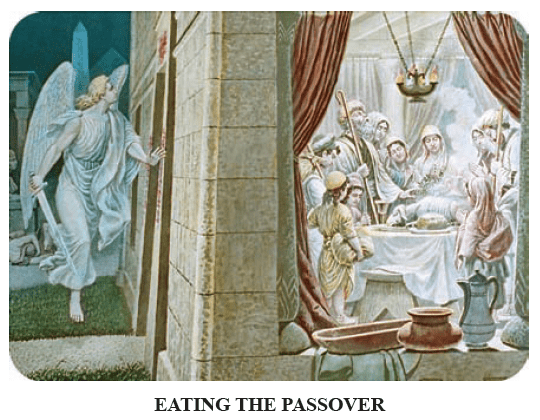
There are multiple potential reasons why God may have instituted this yearly ceremony. First, God no doubt understood that at the end of this plague, Pharaoh and Egypt would finally follow through on the agreement to allow the descendants of Israel to leave Egypt. Perhaps He wanted to thoroughly imprint upon not only the current descendants of Israel, but also in their future generations, that their deliverance came through God, and through God alone. He no doubt knew that the need for that remembrance would become ever more important as the years progressed, and a yearly ceremony and remembrance would serve to help to cement that understanding in the future generations. Secondly, the concept of a blood of a lamb providing the mechanism for deliverance from certain death, would be a concept that God would prove to have a specific reason for imprinting on the minds of not only the descendants of Israel, but on all future generations, including us living today.
Thus it was that, centuries after the events in which the descendants of Israel were spared by following God’s direction of the sprinkling of a lamb’s blood, Jesus found himself in Jerusalem, with his disciples, considering the coming Passover observance. Jesus’s thoughts concerning the upcoming Passover observance are recorded in the book of Luke:
Luke 22:7 Then came the day of unleavened bread, when the passover must be killed.
Luke 22:8 And he sent Peter and John, saying, Go and prepare us the passover, that we may eat.
Luke 22:9 And they said unto him, Where wilt thou that we prepare?
Luke 22:10 And he said unto them, Behold, when ye are entered into the city, there shall a man meet you, bearing a pitcher of water; follow him into the house where he entereth in.
Luke 22:11 And ye shall say unto the goodman of the house, The Master saith unto thee, Where is the guestchamber, where I shall eat the passover with my disciples?
Luke 22:12 And he shall shew you a large upper room furnished: there make ready.
Luke 22:13 And they went, and found as he had said unto them: and they made ready the passover.
Luke 22:14 And when the hour was come, he sat down, and the twelve apostles with him.
Luke 22:15 And he said unto them, With desire I have desired to eat this passover with you before I suffer:
Luke 22:16 For I say unto you, I will not any more eat thereof, until it be fulfilled in the kingdom of God.
Jesus, at the time, was no doubt aware of the shortness of his remaining time on earth. He was gathered with those he felt such love and feeling for that he considered them his disciples. He no doubt knew that his time with them was rapidly coming to a close, and knew that the time in which he would be called upon to face the great sacrifice that only he could fulfill was fast approaching. Even his closest friends, the apostles, with whom he was gathered, probably did not grasp the magnitude of the coming time, or the emotions no doubt felt by their master. This is somewhat evident in the later verses of Luke 22, which describe some of the apostles arguing over which of them would have the most prominent role in the kingdom. This argument was spurred, perhaps, by their misunderstanding of what the kingdom that their master had been preaching actually was. They perhaps believed that their master, who had recently proclaimed himself king, would be setting up an earthly kingdom at that time. Jesus had spoken of his coming death, but perhaps the apostles found the death of their master, the long awaited messiah, to be impossible. Regardless, it is certain that if any of the apostles understood the events of the coming short period of time, or who could have felt or understood their lord’s emotions, they would certainly have reacted very differently.
Luke 22, as well as Matthew 26 and Mark 14, records Jesus’s actions at this time. Knowing that his time was short, he no doubt saw the need to ensure that his followers, both at that present time, and in the future, would understand and remember the sacrifice he was about to make. In a very similar fashion to the actions of his Father those many centuries ago, he chose to ensure this remembrance in the form of a ceremony. Unlike the rather elaborate Passover ceremony and preparations, however, he chose to institute a very simple, two part ceremony of remembrance of him. The first part is recorded in Mark 14:22, and again in Luke 22:19:
Luke 22:19 And he took bread, and gave thanks, and brake it, and gave unto them, saying, This is my body which is given for you: this do in remembrance of me.
To understand the significance of Jesus’s words and of the breaking bread, we need to consider another earlier interaction between God and mankind. After the descendants of Israel left Egypt and were gathered together in a new land to form the nation of Israel, God delivered a series of laws, sacrifices and ceremonies to the Israelites. A perfect keeping of this law would earn an individual justification, or righteousness, in terms of God’s justice. This justification, or righteousness, in turn earned the individual a right to continued life:
Leviticus 18:4 Ye shall do my judgments, and keep mine ordinances, to walk therein: I am the LORD your God.
Leviticus 18:5 Ye shall therefore keep my statutes, and my judgments: which if a man do, he shall live in them: I am the LORD.
Taking on the form and life of a human being, and being born an Israelite and Jew, Jesus had the opportunity to earn this right to life under God’s law. He did so, as testified in the scriptures which describe him as “being obedient unto death”:
Philippians 2:7 But made himself of no reputation, and took upon him the form of a servant, and was made in the likeness of men:
Philippians 2:8 And being found in fashion as a man, he humbled himself, and became obedient unto death, even the death of the cross.
However, Jesus willingly gave up this right to life by allowing himself to be put to death by those who considered themselves his enemy. In so doing, Jesus paid “a ransom price” for mankind, opening a new door of hope for the human race who previously, if Jewish, could not attain a right to life because they could not perfectly keep God’s laws, and if non-Jewish, were not even eligible to justification under God’s law:
Romans 5:1 Therefore being justified by faith, we have peace with God through our Lord Jesus Christ:
Romans 5:2 By whom also we have access by faith into this grace wherein we stand, and rejoice in hope of the glory of God.
The breaking of the bread reminds us of how Jesus allowed his perfect life to be taken and broken; a life which, by all rights he had earned and was his to live. He had no obligation or requirement to give up that perfect life; he did so only out of his profound love for us, the members of the human race.
After breaking and dispensing the bread, Jesus continued to the second part of the remembrance that he wished to institute:
Luke 22:20 Likewise also the cup after supper, saying, This cup is the new testament in my blood, which is shed for you.
The thought of the cup, representing the blood that Jesus shed on our behalf, reminds us that without the sacrifice he made on our behalf, we would be completely lost:
Colossians 1:12 Giving thanks unto the Father, which hath made us meet to be partakers of the inheritance of the saints in light:
Colossians 1:13 Who hath delivered us from the power of darkness, and hath translated us into the kingdom of his dear Son:
Colossians 1:14 In whom we have redemption through his blood, even the forgiveness of sins:
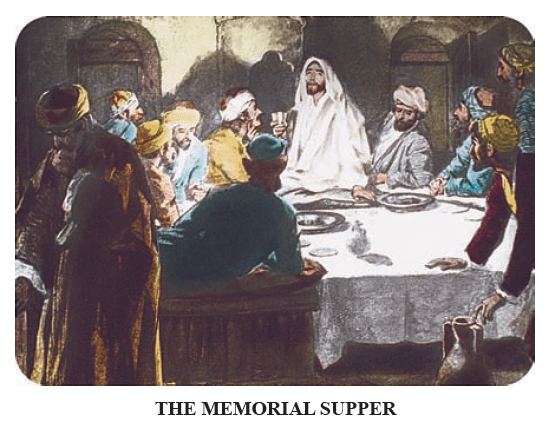
Although observing the Passover, as it was instituted by God those many centuries ago, would not be appropriate or applicable for those who are not descendants of Israel and of the Jewish faith, nevertheless, the concept put forth by the Passover is still worthy of our consideration. Earlier in this study, we proposed that one of the effects of instituting the Passover was to indelibly imprint the concept of a lamb’s blood being responsible for a deliverance from certain death upon the minds of generations of Israelites. Although the keeping of the Passover was not, and is not, appropriate for non-Jewish people (also called Gentiles), this concept, given by God, was, and is, still there to be observed and understood by Gentile people.
There are many places in the scriptures where Jesus is referred to as a lamb, and even further, specifically being a lamb which takes away sin.
John 1:29 The next day John seeth Jesus coming unto him, and saith, Behold the Lamb of God, which taketh away the sin of the world.
Acts 8:32 The place of the scripture which he read was this, He was led as a sheep to the slaughter; and like a lamb dumb before his shearer, so opened he not his mouth:
1 Peter 1:18 Forasmuch as ye know that ye were not redeemed with corruptible things, as silver and gold, from your vain conversation received by tradition from your fathers;
1 Peter 1:19 But with the precious blood of Christ, as of a lamb without blemish and without spot:
Since sin, or disobedience to God was the cause of mankind’s original descent into degradation and eventual death, sin and death can be related in a simple cause and effect relationship. Thus, a “lamb” that can take away “sin” in a very practical sense can be seen as saving mankind from certain death, in the same manner in which the literal lamb’s blood sprinkled over doorposts in the book of Exodus caused death to “pass over” the descendants of Israel in that final, terrible plague. This adds a beautiful dimension to the thought of Jesus as the “lamb of God”.
This type of concept, where a person or an event recorded earlier in the Bible is eventually seen to have been a picture of a coming person, event or concept, is often referred to as a type/antitype relationship. The type is the early person, event or concept, while the antitype is the later person event, or concept that was pictured, or in some cases, foretold, by the type. It is often said that an antitype completes or fulfills a type. We see this relationship between the Passover lamb and Jesus, leading to the statement that Jesus was the antitypical Passover lamb.
Jesus gave up a glorious life, one that we can scarcely imagine, as a spirit being. As the Word, or Logos, he took an active role in the creation process, which, no doubt, included the human race:
John 1:3 All things were made by him; and without him was not any thing made that was made.
He was the only being directly created by God Himself:
John 3:16 For God so loved the world, that he gave his only begotten Son, that whosoever believeth in him should not perish, but have everlasting life.
As the Logos, he was perfectly within his rights to continue on in that existence. Yet, because of his great love and compassion for us, the human race, who, when given the opportunity of free will, chose to disobey the God he had spent countless ages serving, he nonetheless gave up that existence and position to become human, like us. He did so, despite understanding the ultimate reason for taking on that existence. He did so despite understanding that in so doing, he would be shunned, plotted against, and eventually put to death by the very beings he not only helped to create, but gave up so much in order to save from the condition they themselves had caused. While in human form, Jesus experienced every temptation that we ourselves face; dealt with every weakness that could turn one away from God’s law. Yet, in all facets he remained obedient to God’s law, which led to him being eligible for a continued, wonderful life as a human being that, through God’s law, he had every right to have. He gave up even this existence willingly, to purchase mankind from the cycle of sin and death they found themselves trapped in:
1 Timothy 2:5 For there is one God, and one mediator between God and men, the man Christ Jesus;
1 Timothy 2:6 Who gave himself a ransom for all, to be testified in due time.
He did these acts, faithfully, humbly and perfectly, even though none around him at the time understood his words or actions. Despite the suffering that he must have felt, knowing the eventual outcome of his time on earth, knowing that he would soon experience the absence of existence that comes from death, he demonstrated a continuous and ongoing compassion for not only those he considered his friends and followers, but for all those suffering that he came in contact with.
Even though every day of every year is an appropriate time to remember our Lord, this time of year seems an especially fitting to consider not only his great sacrifice on our behalf but also keep the ceremony of remembrance he instituted. Jesus was, in a very real sense, mankind’s Passover lamb; the unblemished lamb of God which takes away the sin of the world. Through the sacrifice of his perfect life, Jesus provided a ransom price for the fallen mankind; ending the concept of obeying a series of laws that were impossible for people to fully keep, and replacing this “justification by works (keeping the law)” with “justification by faith”. It seems even more fitting to remember our Lord during this time of year, and keep the simple remembrance ceremony that he commanded, given that it coincides with the time of year in which he originally instituted it, those many centuries ago, in that small upper room, surrounded within by those he considered his closest friends, and surrounded without by a larger number who so despised him that they actively sought his death.
The time of this remembrance also seems like an appropriate time to pause and reflect on ourselves. Our master’s words, spoken all those long centuries ago, are still ringing down through the years and are still intended for those who have an ear to hear them, even in this day and age. Do we hear them? Do we hear his instructions to follow his example of giving up even the things most dear to us in order to follow the commandment to love God with all our hearts (to love Him even when that love costs us the love and respect of the world, or even those closest to us) and all our souls (all our very essence, our very being) and all our minds (to the point where our thoughts of Him spur us on to work in His name), and further, to love our neighbors (all those fellow members of this one big relationship called mankind) as ourselves? As we reflect on where we were a year ago at this time and compare it against where we are now, a year later, a year we were to have spent in God’s service, do we see an increase? Would we show progress, if our Lord came to our doorstep and demanded that we show him the increase of the talent he had entrusted to us, or would we instead have to admit to burying our talent in the ground for a year, hidden away from all good that could have come of it and ultimately of use to no one, let alone our master? When our minds have dealt with the necessary business of the day and fulfilling our responsibilities to our families, loved ones, jobs and brethren, what thoughts did we find our minds drifting to over the course of the past year? Did we, and do we, find them drifting more and more to God, and the work of the present time which He has entrusted us with? Do we find our thoughts drifting toward what steps we can further take to improve our characters and overcome our shortcomings in order to more closely follow the pattern set for us by our master? Or do we find ourselves increasingly concerned over more worldly thoughts; whether thoughts of the world’s troubles, or thoughts of pleasure and past times, or thoughts of bodily aches and ailments as we feel, with every passing year, more strongly the weight of the years upon our imperfect bodies?
If we are fortunate enough to have heard and understood our master’s words; if they have taken root in our hearts at any point in our lives and begun the process of transforming our hearts and minds to draw closer to our master and to his glorious Father, then it is not too late. As long as we have strength, as long as we have one more breath, as long as our minds can still reach out and hear our master’s commandments and words echo and resonate in our hearts, we still have the blessed privilege of holding fast to the promises of justification in God’s eyes by clinging fast to the assurance that faith in our master’s sacrifice, which we so gratefully and reverently observe during this time, is sufficient to cover our shortcomings. The troubles of this world at the present time are serious indeed, and can certainly be overwhelming. Regardless of what situation we find ourselves in; regardless of what age we are or what stage of life we are in, if our master’s words have made their way into our hearts, there is always reason to be grateful to him. There is always something further, that one more step, regardless of how small it may seem to us, that we can take in God’s service.
As we reflect upon our Lord’s memorial that he instituted in that small room, all those centuries ago; as we reflect upon the bread that represents that perfect human body that he sacrificed on our behalf, and the cup that represents the blood that he allowed to be spilled on our behalf as well, let us also renew our resolve to demonstrate our appreciation for that sacrifice by further developing our characters, by further performing the work laid out for us, by taking that one more step towards better reflecting our wonderful lord and master and savior. Thanks be to God, who is mighty, wise, just and loving far beyond our limited means to comprehend. Thanks be to God, who opened our eyes to see the unfolding of His great plan for mankind, not only in ages past but now, literally before our eyes. Thanks beyond all words and all expression to our master, His son, who did not and does not give up on us, or indeed all mankind; who expressed his love for us, His Father, and His Father’s plan at such a great personal cost. As we reflect on the bread and on the cup and on the simple ceremony he commanded us to keep, our prayer remains that we continue to progress in our development; that we continue to honor and remember his sacrifice to the best of our imperfect abilities, by continuing to follow his example that he so fervently wished for us to keep – to love God, His perfect Father with all our hearts, and to love our neighbors as ourselves.
Further Readings and References
- The Dawn Bible Students Association regularly produces Biblical studies, study aids, devotional materials, and articles, including a monthly publication. For those interested, they maintain a listing of audio reflections on our Lord’s Memorial, that can be accessed, free of charge.
- The website Most Holy Faith maintains an extensive on-line library of reflections and studies on our Lord’s Memorial, as well as related topics such as the Passover, the concept of the ransom price paid by our Lord for mankind and our Lord’s entry into Jerusalem
- The Pastoral Bible Institute publishes the Herald magazine one every two months. In addition to examining current events from a Biblical standpoint, each issue provides multiple short studies on a central theme. Many issues of the Herald have covered our Lord’s memorial including:
- The pictures in this study are from the article “The Baptism of Jesus” of the greater work The Photo-Drama of Creation. This book contains many other rich illustrations as well as accompanying articles and other faith-inspiring reflections on our wonderful God and His plan for mankind.
- (Please note that although some of these links will take you to the Chicago Bible Students online bookstore, where physical copies of these books may be purchased, each of the books may also be downloaded from the store, free of charge, with no obligation to provide any personal information. Simply click under the description of each item to find the download link)
 State College Bible Students