The Gospel Age part 3: “The Cost of Mankind’s Ransom”
In our last few studies, we have been considering the period of time in God’s plan that spanned from roughly the period of time from Jesus’s birth, life on earth and eventual death to the present day. We proposed the name “The Gospel Age” for this period of time; the word “gospel” signifying “the proclaiming of good news”. Over the course of the past two studies, we have considered the scriptural account of the early days of this age, and began to examine two scriptural concepts that will prove to have a profound impact on the Gospel Age. The first concept proposed was the concept of “justification by faith”. In that study, we examined how the concept of justification, or righteousness in view of God’s justice, had transitioned. As a result of disobedience to God’s law, Adam and Eve, the first man and woman, fell into unrighteousness, and incurred the inevitable penalty of death. This sentence was passed on to all of their descendants. We examined how, many centuries later, God gave a series of laws to a group of his favored people, and promised justification if the law was kept. We examined how the scriptures referred to this type of justification as “justification by works”. This justification was only open to those of mankind who were part of God’s favored people, the descendants of a man named Israel, and further only granted to those who could perfectly keep this series of laws. We reviewed how only Jesus was able to keep this set of laws and attain “justification by works”, and that after his death, the concept of “justification by works” transitioned to one of “justification by faith”. Under this new arrangement, any member of mankind could (and can) attain righteousness in terms of God’s law by expressing sufficient faith in Jesus to follow his commandment, which was to love God with all one’s heart, and love one’s neighbor as oneself. Although open to a greater number of mankind, we reviewed how the opportunity for this type of justification still only seemed applicable to a subset of mankind, and for a limited time period.
The second concept proposed was the concept of the promise of the “restitution of all things”. The beginnings of that study saw our focus return all the way to the beginning of God’s plan for mankind. We re-examined the scriptural account of mankind’s creation, and proposed the concept that the first man and woman, having been created in “God’s image” implied a state of human perfection, both physical and mental. We reviewed how that perfection was lost due to disobedience to God’s command, resulting in mankind descending to an imperfect, degraded state. We examined the scriptural occurrences of the term “restitution”, and drew the conclusion, based on a review of each of these occurrences, that by definition, the term “restitution” refers to the restoration of something that was once possessed but was lost. We examined many scriptural usages of the term “restitution”, and saw that there was a strong correlation between the term “restitution” and to incidents of a return to, or a restoration of, physical or mental health; in some cases, restoration from even the most severe health condition – the state of death itself. We also examined how this promise of restitution, being made for “all things” referred to all mankind. Just as the fall from a state of perfect health and mental well-being into a degraded state was, and is, shared across all mankind due to Adam’s disobedience, in a likewise fashion, the promise of the restitution of all things refers to the restoration, the reinstatement – the restitution – of that which was lost, and to whom it was lost. We briefly touched on this concept, the “restitution of all things” being a different concept, and by definition, applicable to a wider range of mankind than the concept of “justification by faith”. Before continuing with a more in-depth look at the comparisons, contrasts and implications of these two concepts, let us examine one more aspect related to the “restitution of all things”; namely, what changed or what happened as to facilitate the promise of this restitution into God’s plan for mankind? After all, the terms of God’s commandment to Adam and Eve were clear; obey and be allowed to enjoy continued life and perfection; disobeying would result in a penalty of death. Those terms had not changed. Adam and Eve’s sin of disobedience had not changed. If God’s justice is perfect and his character is never changing, what happened at the beginning of the Gospel Age to now offer the promise of a recovery, a “restitution” from that state of degraded physical and mental health?
The answer is, of course, Jesus.
There is a saying among most, if not all, branches of Christianity that “Jesus died for my sins”. This saying is perhaps so well known that many members of mankind outside of Christianity are familiar with this saying as well. This saying actually is extremely relevant to the question of, what enabled the promise of the “restitution of all things”. Let us attempt to trace a path through the scriptures in support of this concept, and then return to this statement at the end and determine if a study of the scriptures can add clarity to the statement’s meaning.
As touched on previously, the need for mankind’s restitution begins at the very start of mankind, with the first two members of mankind, Adam and Eve. Although created in “God’s image”, Adam and Eve were also created with the ability to reason, choose, and exercise free will. God’s commandment to them was very direct and very definitive:
Genesis 2:16 And the LORD God commanded the man, saying, Of every tree of the garden thou mayest freely eat:
Genesis 2:17 But of the tree of the knowledge of good and evil, thou shalt not eat of it: for in the day that thou eatest thereof thou shalt surely die.
Such a clear statement would seem to offer little or no hope for mankind related to recovery or restoration from this state where death was the end result, if it weren’t for a statement that God made to the adversary, whom the scriptures in the Genesis account refer to in the form of a serpent. In chapter three, God confronts Adam and Eve with their disobedience and delivers the just and clear sentence; but during this confrontation, God also addresses the adversary and delivers a further judgment:
Genesis 3:15 And I will put enmity between thee and the woman, and between thy seed and her seed; it shall bruise thy head, and thou shalt bruise his heel.
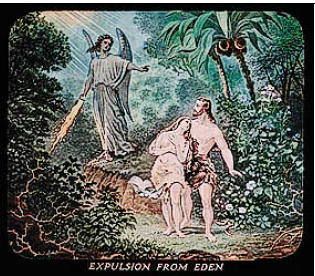
Certainly, the meaning of this proclamation was, at the time, vague enough that none involved save God were sure of the specifics of how this proclamation would come to pass. What was important, though, is the profound implication of God’s making this proclamation at all during this time. Adam and Eve were found guilty of willfully disobeying the one forbidden act that had been specified to them. The adversary was seemingly successful in his endeavor to corrupt the perfection that God had created. Yet, before pronouncing sentence on Adam and Eve, God took the time to turn to the adversary and assure him that his “victory” was nothing of the sort. In time, through the very creation he sought to corrupt, the adversary would meet his downfall. Adam and Eve no doubt also heard this proclamation. The scriptural account does not tell us why God made this proclamation to the adversary, or what Adam or Eve’s reaction was to hearing it, but considering now, with the benefit of the many centuries that have passed, perhaps this was intended to be a comfort to mankind. Perhaps this was intended to be a subtle glimpse into God’s plan for mankind meant to reassure the fallen members that even though God’s perfect justice seemed to offer no recourse from eventual death, this thought, like the thought of the adversary’s seeming “victory” was not correct and that, in time, a very different and more positive outcome would become realized.
Although it was not understood at the time, and in truth, is no doubt understood even today by mankind, consider for a moment what “bruising the head” of the adversary may actually mean. A “bruising of the head” implies a final, fatal blow; a permanent victory. Consider further what the adversary’s goal was for Adam and Eve. He tempted them with lies about the penalty for disobedience:
Genesis 3:4 And the serpent said unto the woman, Ye shall not surely die:
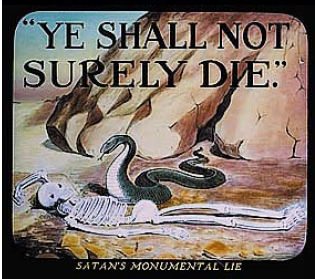
His goal was, through deceit (some refer to this deceit on the adversary’s part as “the first and greatest lie”), to cause Adam and Eve to doubt God’s word and disobey His command. In this, he was successful, gaining a seeming victory. Adam and Eve fell from perfection and eventually died, as did their descendants. Consider the thought that a final victory over the adversary also implies a final victory over his plans; plans which included deceiving mankind into a state of sin and eventual death. It would not be unreasonable, then to consider that a victory over these plans would result in a victory over mankind’s death sentence. Although nothing in this seemingly short proclamation in Genesis 3:15 explicitly specifies this thought, as we progress through this study and see God revealing His plans ever more brightly, these considerations may, when reviewed through the benefit of time, take on a greater strength and harmony.
In the following decades and centuries, mankind did indeed begin to experience the effects of sin and disobedience. Sickness and death became well-known occurrences to mankind. Some of mankind remembered God and maintained reverence and worship of Him, while others strayed away. Some centuries after Adam and Eve’s disobedience, God began a special relationship with a man named Abram, who was later renamed Abraham. Abraham’s faith and obedience eventually led God to make a very profound promise to Abraham:
Genesis 12:2 And I will make of thee a great nation, and I will bless thee, and make thy name great; and thou shalt be a blessing:
Genesis 12:3 And I will bless them that bless thee, and curse him that curseth thee: and in thee shall all families of the earth be blessed.
God later repeated this same promise to Abraham’s grandson Jacob, who would later be renamed Israel:
Genesis 28:13 And, behold, the LORD stood above it, and said, I am the LORD God of Abraham thy father, and the God of Isaac: the land whereon thou liest, to thee will I give it, and to thy seed;
Genesis 28:14 And thy seed shall be as the dust of the earth, and thou shalt spread abroad to the west, and to the east, and to the north, and to the south: and in thee and in thy seed shall all the families of the earth be blessed.
Although these promises (or, more accurately, these repetitions of the same promise) do not mention the concept of a restoration or restitution of the state lost due to Adam and Eve’s disobedience, like the proclamation God made to the adversary earlier, the fact that God even makes such a promise carries a very profound implication. In this promise, God vows to bless “all the families of the earth”. This is a very broad statement. In repeating the same promise to Abraham and his grandson, members of different generations, there is a clear implication that God was not promising to bless “all the families of the earth” at that specific time. If this were so, we would expect to look back through history and see a massive outpouring of blessings across all of mankind at Abraham or Jacob’s time, and history does not seem to record such an occurrence. We might also expect the promise not to be repeated through different generations if it were to be applied to only the families of earth at Abraham’s time or Jacob’s time. Hence, there is a clear implication that the term “all” means exactly what one might consider “all” – all encompassing; all inclusive; every member of the huge and expansive family of mankind. Such a definition of “all” would then imply all mankind, back to Adam and Eve, and all their descendants, which include all people through the present day. With this interpretation of God’s promise in mind, we see a glimpse into the grand scope of His plan. First, we had only God’s proclamation to the adversary that he would eventually be destroyed by a descendant of Eve’s (one of mankind). Now we have a promise that blessings of some type would eventually flow outward to “all the families of mankind”. Especially since it would not be possible to flow blessings to those in a state of death, the implications of this promise become even more precious and profound.
Still later, God would gather the descendants of Abraham’s grandson Jacob, who was later renamed to be Israel, to form a special and favored group of people. To these people, God gave a special series of laws and sacrifices, as chronicled in the Old Testament books of the Bible Leviticus, Numbers and Deuteronomy. Through the keeping of this law collectively as a nation, God promised the nation of Israel that they would be His special people, and enjoy the benefits of obedience, as well as the punishments and period of disfavor of disobedience. In addition, however, God also promised a reward to individuals who kept His laws:
By promising “life” to those who would keep His laws, God was, in essence providing individuals with a path to justification, to righteousness in terms of His justice. A promise of life fundamentally overrules a sentence of death. The implication was that through the perfect keeping of God’s laws and sacrifices, an individual could “overcome” the proclamation of death given to Adam and Eve all those centuries ago. Thinking of God’s justice in the form of a series of scales, of the type with two plates, one on each side of the scale, mankind had been brought down through Adam and Eve’s disobedience; mankind’s figurative “plate” on the scale was pulled down by that sin, causing the scale to be out of balance. The promise of life through the perfect keeping of God’s law now offered an opportunity for an individual to “balance” that scale, at least for themselves. Although the law was only given to the descendants of Israel, a small subset of the human population, and although none found themselves able to perfectly keep this law (for many centuries), nevertheless, this opportunity for balance, for justification still provides a crucial next glimpse into God’s plan. A path was now open that had not been open before.
Over time, God began to deal with the descendants of Israel; sometimes directly, and sometimes through special individuals and prophets. God granted these prophets a variety of visions. Some of these visions dealt specifically with the nation of Israel. Some of these visions also spoke of a future king, sometimes referred to as a “messiah”. Others spoke of a time of restoration; a return to favorable conditions after a time of hardship. Many of these prophecies dealt with the physical restoration of the nation of Israel after a time of disfavor and punishment for their disobedience. Those words “a time of disfavor and punishment for their disobedience” strike a familiar chord with the concepts covered earlier in this study. As we have covered, mankind in general was also experiencing a period of disfavor and punishment for disobedience. The similarities between Israel’s situation and mankind’s situation are not coincidental or accidental. When viewed as, many of the prophecies regarding Israel’s disfavor due to disobedience and eventual restoration have both a literal application, directly applicable to the actual nation of Israel, as well as a broader application to mankind in general, a harmonious picture with the previous events outlined in the Old Testament begins to take on a clearer, more wonderful form. One such prophecy with interpretations applicable to mankind in general was given to the prophet Hosea:
Hosea 13:4 Yet I am the LORD thy God from the land of Egypt, and thou shalt know no god but me: for there is no saviour beside me.
Hosea 13:14 I will ransom them from the power of the grave; I will redeem them from death: O death, I will be thy plagues; O grave, I will be thy destruction: repentance shall be hid from mine eyes.
Of particular note here is the use of the word “ransom” in verse 14. The word “ransom” as used here is Hebrew word 6299 in Strong’s Concordance. Among the definitions associated with the word are “to release”, “rescue” or “deliver”. What a beautiful prophecy this is! When considering how death was (and is) the promised punishment for Adam and Eve’s disobedience, the prophecy of a “ransom” or “release” from that punishment is as clear as it is powerful and wonderful. “Release” carries with it the thought of being in captivity, as well as the thought that the captivity is not permanent; that there is a possibility of that captivity ending. When considering that the “captivity” in this case is death, God’s words, delivered through His prophet, become very profound and precious indeed. Although God does not provide details as to the mechanism behind this release or “ransom”, the very promise of such a release, through this prophecy, is a significant progression in the revealing of God’s ultimate plan.
This word “ransom” appears again in another prophecy given to a different prophet, Isaiah. Even though this prophecy appears in the Old Testament before the prophecy examined above given to Hosea, we examine Isaiah’s prophecy second:
Isaiah 35:10 And the ransomed of the LORD shall return, and come to Zion with songs and everlasting joy upon their heads: they shall obtain joy and gladness, and sorrow and sighing shall flee away.
The word “ransomed” as used in Isaiah 35:10 is again Strong’s Hebrew word 6299, again carrying with it the thought of “released” or “rescued” or “delivered.” In verse 10, the phrase “ransomed of the Lord” is used. Much like the prophecy in Hosea, when considered in conjunction with the thought of the human race, the descendants of Adam and Eve, under a penalty for disobedience, this prophecy takes on a wonderful and hope filled meaning. Although the punishment for disobedience was justly earned by Adam and Eve, and the consequences of that disobedience clearly laid out before hand, it was God who delivered the sentence. It is also God, then, who can provide the mechanism, the facilitation for the reprieve or releasing from that sentence. When viewed from this perspective, it seems reasonable that the phrase “the ransomed of the Lord” can be applied to those who require a “release” – the descendants of Adam and Eve – mankind. In future studies, we will return to the prophecy in Isaiah 35, as these few sentences in this study reveal only a fraction of what this prophecy holds for mankind and its future place in God’s plan. For now, we simply propose that through this prophecy, like the prophecy in Hosea, God is providing another bit of enlightenment in terms of His plan.
So far, we have followed a path through the scriptures that provided a gradual progression in terms of God’s revealing of His plan for mankind. We started at the beginning of mankind, at a particularly difficult moment for mankind, having fallen from perfection from disobedience. We considered God’s proclamation that, in time, one of mankind’s descendants would facilitate the final overcoming of the adversary’s plans. We saw God make a promise to one He considered faithful that “all the families of the earth would be blessed”, which carried the thought that God’s plan did not include permanent punishment, but would include eventual blessing. We then saw God select a special subset of mankind, demonstrating that even though mankind had disobeyed Him, He was still willing to work with them. We further saw God deliver a series of laws and sacrifices to this people, the perfect keeping of which would earn an individual justification in terms of God’s justice; in other words, life. We examined two prophecies that seemed to indicate that God’s plan for mankind included the thought of a “ransom” – a release or a deliverance. However, one thing was still not quite clear – what was the mechanism of this “release” or “ransom?”
Matthew chapter 20 of the New Testament describes Jesus and his disciples traveling to Jerusalem. As they enter the city, Jesus begins to speak of events that would be soon happening; in particular, a betrayal that would lead him to fall victim to the plans of the religious leadership of the Jewish people at the time, which would lead to his death. He also refers, clearly, to his resurrection from the state of death. These approaching events surely were at the forefront of Jesus’s thoughts at the time. Shortly afterward, Jesus made the following statement which can also be seen in Mark 10:45):
Matthew 20:28 Even as the Son of man came not to be ministered unto, but to minister, and to give his life a ransom for many.
The word translated as “ransom” in this verse is Greek word 3083 in Strong’s Concordance. This Greek word, “lutron”, carries the meaning of “something to loosen with, i.e. a redemption price). Strong’s indicates that this word, “lutron” in term is derived from or associated with Strong’s Greek word 3089, which means to break up, melt or put off. Certainly, this latter part of the definition, of loosening or putting off seems in line with the Old Testament applications we discussed previously. In the Old Testament, we examined two prophecies in which the term “ransom”can be related to God’s indication that His plan included a release from the punishment of death which mankind found (and finds) themselves under. The thoughts of “breaking up” seem to be in line with the definitions associated with the Hebrew word from the two Old Testament prophecies, such as “release” and “rescue”. In fact, the thought of a “putting off” of the punishment state of death seems very much in line with the interpretations examined previously. However, there are some additional nuances to the Greek word “lutron” that do not appear to be associated with the Hebrew word examined earlier. In particular, “lutron” carries the thought of a price that is paid for the redemption or putting off.
This thought seems very much in line with modern interpretations of the word “ransom”. In modern terms, a “ransom” is usually thought of as a price, usually monetary, that one might pay to have a captured person or loved one returned from captivity. With this thought in mind, Jesus’s words in Matthew 20:28 become very clear, profound and important. “Ransom” as translated from the Greek word “lutron” does signify release and deliverance, but at a cost; and Jesus is telling his disciples (as well as us, centuries later) that the cost of that release, that deliverance, is his own life. How, then could Jesus’s life provide this “ransom cost” for mankind’s release from the captivity of the degraded state they found themselves in?
Over the course of this study, we have covered several times how mankind fell into a degraded state, ending in death, as a result of Adam and Eve’s disobedience to God’s commandments. We also examined how, centuries later, God gave a series of laws and sacrifices to a group of mankind, the descendants of Israel, that, if kept perfectly, would result in justification or righteousness in terms of God’s justice, and this justification meant a right to life outside of the punishment of death. The scriptures do not tell us of any who were able to keep God’s law, however, anymore than Adam and Eve were able to follow God’s commandment in the Garden of Eden. However, in time, one man, Jesus, was actually able to keep God’s laws perfectly. Consider the words of Paul in his letter to the church at Corinth:
II Corinthians 5:20 Now then we are ambassadors for Christ, as though God did beseech you by us: we pray you in Christ’s stead, be ye reconciled to God.
II Corinthians 5:21 For he hath made him to be sin for us, who knew no sin; that we might be made the righteousness of God in him.
In these verses, Paul clearly refers to Jesus as “knowing no sin”. As we have discussed, the definition of sin is disobedience to God. It follows, then, that to “know no sin” must mean that the individual committed no disobedience to God or any of His laws or commandments. This thought is repeated by Paul in the book of Philippians:
Philippians 2:7 But made himself of no reputation, and took upon him the form of a servant, and was made in the likeness of men:
Philippians 2:8 And being found in fashion as a man, he humbled himself, and became obedient unto death, even the death of the cross.
Here, Paul describes Jesus as having been “obedient unto death”. To a descendant of Israel, a Jew, such as Jesus was, any obedience would include an understanding and obedience to the laws and sacrifices that God had given to the descendants of Israel, the Jewish people, those many centuries ago. It seems clear, then, that Jesus was the first of the Jewish people to be able to keep God’s laws and commandments perfectly. In this, he accomplished what even Adam could not – he remained obedient to God’s commands. Where Adam failed, Jesus succeeded. In terms of God’s justice, then, Jesus found himself in a unique position. He alone, throughout the centuries, found himself having a right to life. Yet, we know that shortly after Jesus spoke these quoted words, he allowed himself to be delivered into the hands of those who considered themselves his enemies, and further, willingly allowed himself to be put to a death that, by all rights, he was free from under God’s law.
With this thought in mind, Jesus’s words about “giving his life as a ransom for many” becomes clearer. A “ransom” as translated from the Greek word “lutron” carries with is the thought of a price. Returning back to the illustration of God’s justice as a scale, with two plates on each side of the scale. The scale balances when items of equal weight are placed on each plate on each side of the scale.

Earlier in this study, we proposed that Adam’s disobedience set this scale of God’s justice out of balance. Adam’s fall from perfection caused one side of the scale to fall, weighed down by the introduction of sin. Only a corresponding weight, a perfect life as was lost when Adam’s disobedience caused the loss of that perfect life, placed on the other plate of the scale, could cause that scale to be again balanced. This balancing, then, was how Jesus’s willing sacrifice of the life he had earned under God’s law provided the “cost” of the release or ransom. In sacrificing the life he had earned by the perfect keeping of God’s law, he, in essence “purchased” mankind’s release from the punishment incurred those many centuries ago, and thus in a very real sense, “purchased” mankind itself. After all, “paying a cost” certainly follows that one is purchasing what one is paying a cost for. This concept is shared among many cultures and belief systems, that by saving the life of another, one becomes responsible for the one who is saved. Further, the one who is saved often feels a lifetime debt toward the one who acted as savior. With these thoughts in mind, it becomes perhaps clearer to envision the concept of Jesus “purchasing” mankind through the willing sacrifice of his perfect human life.
The Apostle Paul refers to Jesus’s sacrifice of his justly earned perfect life as a ransom price for mankind’s penalty and punishment for sin and disobedience several times.
I Corinthians 15:20 But now is Christ risen from the dead, and become the firstfruits of them that slept.
I Corinthians 15:21 For since by man came death, by man came also the resurrection of the dead.
I Corinthians 15:22 For as in Adam all die, even so in Christ shall all be made alive.
In these seemingly simple sentences, Paul summarizes the thoughts that we have endeavored to lay out in the past few paragraphs of this study. In these verses we see the “two sides of the scale” – Adam on the one side, and Jesus on the other. Paul lays out a simple relationship between the two, making the concept of the balance one provides to the other very plain. He also explicitly lays out exactly what aspects are being compared – “by man came death”, referring to Adam’s disobedience causing the fall from perfection and death penalty for sin on the one side of the scale, and Jesus on the other side, enabling a release or “resurrection” from that state.
Paul more explicitly refers to Jesus’s payment of this ransom price in I Timothy:
I Timothy 2:5 For there is one God, and one mediator between God and men, the man Christ Jesus;
I Timothy 2:6 Who gave himself a ransom for all, to be testified in due time.
Note here that in verse six, Paul refers to this ransom as a “ransom for all”. Note also that in Matthew 20:28, Jesus refers to the ransom cost that he would pay as a “ransom for many”. Although the vast size of the family of mankind certainly qualifies an “many”, the thought of “many” certainly does not seem to be as exact a statement as “all”. We will refer back to this subject in future studies, but for now, we will leave the consideration with the thought that the intent of both scriptures is the same. Jesus provided the “ransom cost” – the cost of release, the balancing weight on the scale of God’s justice, for Adam (and thus mankind’s) sin and disobedience.
One final statement from Paul leaves us with no room for doubt that the effect of Jesus’s willing sacrifice of his perfect human life was a “ransom price” which allowed him to “purchase mankind” from its state of sin, degradation and death:
Philippians 2:9 Wherefore God also hath highly exalted him, and given him a name which is above every name:
Philippians 2:10 That at the name of Jesus every knee should bow, of things in heaven, and things in earth, and things under the earth;
Clearly, the thought of “every knee bowing” “in earth” declares the result of the “ransom price” paid by Jesus on behalf of mankind as one applicable to all mankind.
As we conclude this study on “the ransom cost” let us return to the question posed at the beginning of the study. Many across branches of Christianity declare “Jesus died for my sins”. This declaration is so well-known as to even be recognized across the non-Christian world and populace in general. But what does this statement actually mean? In this study, we have endeavored to lay out a scriptural foundation that answers, through disobedience to God’s commandment, Adam and Eve fell from a state of perfection and continued life to one of degradation ending in death. This state was inherited through all their descendants through the present day, the sum total of which comprise the human race. God offered justification through the perfect keeping of His law. Jesus was able to perfectly keep that law, and thus was the only person to ever earn justification, but willingly surrendered it. In so doing, he paid a “ransom price” for mankind; a cost that resulted in the release of mankind from the punishment that they were under due to disobedience and sin. The statement “Jesus died for my sins” is thus scripturally sound, and the implications of that statement are both wonderful and awe-inspiring not just for those who understand the statement and its implications now, but, as God’s plan for mankind progresses, will prove wonderful for all mankind.
In our next study, we will, at last, return to the concepts of “justification by faith” and “the restitution of all things”. In particular, we will compare the two concepts, as, although both seem to be strongly supported in the scriptures, there do seem to be some fairly fundamental, and, perhaps, at first, confusing and distinct aspects to both. “Justification by faith” seems applicable to a relatively small subset of mankind, and seems applicable to the present time, with limitations on how much further into the future the concept will be relevant. “The restitution of all things”, on the other hand, seems applicable to a much larger group; all mankind in fact, and seems applicable to a future time in God’s plan. Our next study will attempt to lay out a scriptural foundation that harmonizes both of these two concepts, their time frames, their recipients, their requirements and their rewards. In doing so, we will continue to bring to light more and more the wisdom of God to have implemented such a beautifully wrought plan for His creation, the power God possesses to make such a plan a reality, the perfect justice of God, which, although can tolerate nothing short of perfection, allows for a plan and purpose for His imperfect creation, and the abundant and overwhelming love that God has for all of mankind.
Psalm 103:2 Bless the LORD, O my soul, and forget not all his benefits:
Psalm 103:3 Who forgiveth all thine iniquities; who healeth all thy diseases;
Psalm 103:4 Who redeemeth thy life from destruction; who crowneth thee with lovingkindness and tender mercies;
Posts in the “God’s Plan for Mankind” Study
- A Study in God’s Plan for Mankind – Study 1: In the Beginning
- A Study in God’s Plan for Mankind – Study 2: The World That Was
- A Study in God’s Plan for Mankind – Study 3: The Patriarchal Age part 1
- A Study in God’s Plan for Mankind – Study 4: The Patriarchal Age part 2
- A Study in God’s Plan for Mankind – Study 4a: Jacob’s Hip
- A Study in God’s Plan for Mankind – Study 5: The Jewish Age part 1: The Children of Israel
- A Study in God’s Plan for Mankind – Study 6: The Jewish Age part 2: Typical Justification and Life
- A Study in God’s Plan for Mankind – Study 7: The Jewish Age part 3: Judges, Kings and Prophecies
- A Study in God’s Plan for Mankind – Study 8 – The Jewish Age Harvest part 1: Prophecies Fulfilled
- A Study in God’s Plan for Mankind – Study 9 – The Jewish Age Harvest part 2: The Four Phases of Jesus’s Human and Post-Resurrection Existence
- A Study in God’s Plan for Mankind – Study 10 – Beginnings, Endings and Overlaps
- A Study in God’s Plan for Mankind – Study 11 – The Gospel Age part 1: Justification by Faith
- A Study in God’s Plan for Mankind – Study 12 – The Gospel Age part 2: The Promise of the Restitution of All Things
- A Study in God’s Plan for Mankind – Study 13 – The Gospel Age part 3: The Cost of Mankind’s Ransom
- A Study in God’s Plan for Mankind – Study 13a – The Gospel Age part 3a: Faith: The Work of a Lifetime
- A Study in God’s Plan for Mankind – Study 14 – The Gospel Age part 4: The High Calling
- A Study in God’s Plan for Mankind – Study 15 – The Gospel Age part 5: God’s Plan and the Permission of Evil
- A Study in God’s Plan for Mankind – Study 16 – The Gospel Age part 6: The Great Company
- A Study in God’s Plan for Mankind – Study 17 – The Gospel Age part 7: The Gospel Age in Summary
- A Study in God’s Plan for Mankind – Study 18 – The Gospel Age Harvest part 1: An Introduction to the Concept of the Harvest at the End of the Gospel Age
- A Study in God’s Plan for Mankind – Study 19 – The Gospel Age Harvest part 2: The Lord’s Return and Presence in the Gospel Age Harvest
- A Study in God’s Plan for Mankind – Study 20 – The Gospel Age Harvest part 3: The Completion of the Church Class
Further Readings and References
- For a much more in-depth look at the concept of mankind’s ransom price as paid by Jesus, students may be interested in study nine of the greater examination of God’s plan for mankind The Divine Plan of the Ages
- The book The Creator’s Grand Design offers several short but interesting and faith strengthening studies on many topics of God’s plan for mankind, including many of the concepts covered in this post, such as “the restitution of all things”, mankind’s ransom price as paid by Jesus, and the implications of “justification by faith”
- Please note that although some of the links above will take you to the Chicago Bible Students online bookstore, where physical copies of these books may be purchased, each of the books may also be downloaded from the store, free of charge, with no obligation to provide any personal information. Simply click under the description of each item to find the download link)
 State College Bible Students