
Introduction – Fear in the Night
Close your eyes for a moment. Imagine that the darkness that is now surrounding you is the darkness of sleep. Your sleep comes at the end of an extremely busy, but productive day. It was a day filled with activity, excitement and interactions with many people, some friends; some strangers. In this half- awake, half-asleep condition, you dimly replay some of the lessons that were imparted to you toward the end of the day. You drowsily reflect on how the understanding of these lessons was given to you, and a small group of friends and companions, apart from the many people you interacted with during the previous day. The fact that you are surrounded by many of those in this small group of close friends, as well as the individual who has united your group together, provides some level of extra comfort as you slowly drift toward full sleep.
Suddenly, you are snapped out of your drowsy state. As your senses return to you, you remember boarding a boat and setting out to sea at the day’s end, in the hopes for some peace and rest away from the crowds. Instead of the gentle rocking of the boat that lulled you almost to sleep, you instead feel the boat begin to violently churn. Your state of concern is heightened by the muffled cries of your friends who are above you, on the deck of the ship. You know that many of your friends are also experienced fishermen, like you, and have spent much of their lives on the very sea you are on. Their cries of alarm send an icy chill across your spine. These are not men that would cry out in the face of a little rough water.
With panic rising in your throat, you climb the ladder that leads to the deck. Here, the situation is worse than all of your wildest fears. Upon opening the hatch, your face is immediately stung by icy needles of sea spray. The wind grabs at your hair, plastering it against your eyes. All around you, you hear the shouts of your friends as they desperately try to regain control of the boat. You push your hair out of your eyes and look toward the sky. You do not know which frightens you more; the jet-black ceiling above, where there should be the welcoming moon and stars, or the blinding flashes of lightning which cause the world to scream into full vision with an intensity that surpasses even the noonday sun.
With growing panic, you realize that the boat cannot take much more. You see your friends clinging to the fixtures of the boat, crying out in terror at the prospect of being swept off of the slick black deck and out into the churning sea.
Where is the Master? You have witnessed him performing the most amazing miracles, and have believed, with all your heart, that he has been sent by the true and living God that you worship. You and your friends have given up everything – your homes, your livelihoods, your families – everything – in order to follow him. You have been given such promises, been told to have confidence that through your faith, you are treasured and watched after. As another wave crashes up over the deck and scours you with an icy force that nearly knocks you to your knees, your panicked mind begins to scream the very realistic possibility of your death. As this vision overwhelms you, as the shouts of your friends echo in your ears, you find you can no longer contain your terror.
“Master!” you finally cry out, as the wind takes your voice and the sting of the water burns your throat. “Carest thou not that we perish?”
The Concept of Fear
Throughout its history, mankind has sought to define itself by its differences to others. Man versus woman. Keeper of sheep versus tiller of the ground. Jew versus Gentile. Christian versus Jew. Of Apollos versus Of Paul. Catholic versus Protestant. Of “the household of faith” versus of “the body of Christ”. There is nothing necessarily wrong with many of these separations. The ability to see patterns and draw separations is one of the blessings that God granted to mankind and is a necessary requirement to the ability to gain dominion over the earth, as directed by God in Genesis chapter two.
However, as many separations as there may be, there are also many common and fundamental traits that are shared across all divisions of mankind. One of those traits is fear.
Like most things, there is nothing inherently wrong with fear. Fear stops one from stepping off the top of a high building. Fear prevents one from interacting with a dangerous animal. Fear stops one from running across a busy interstate highway. Fear, in its proper place, helps to ensure continued health and survival.
As might be expected of an emotion so fundamental to the human condition, the earliest account of fear in the scriptures is found very early. In Genesis chapter two, God issues a commandment to Adam and Eve, the first man and woman, and also clearly indicates the punishment for disobedience:
Genesis 2:16 (RVIC) And Jehovah God commanded the man, saying, Of every tree of the garden thou shalt surely begin to eat:
Genesis 2:17 (RVIC) but of the tree of the knowledge of good and evil, thou shalt not eat of it: for in the day that thou eatest thereof thou shalt surely begin to die.
Genesis chapter three opens with the adversary, in the form of a serpent, opening an exchange with Eve, the first woman. By entertaining the exchange, Eve created an opportunity for the serpent to deliver the first and greatest lie ever told:
Genesis 3:4 (RVIC) And the serpent said unto the woman, Ye shall surely not begin to die:
Deceived by the lie, Eve, eats the fruit of the tree. She also takes it to her husband Adam, who eats it as well. Although the scriptures do not explicitly say why Adam does this, in eating the fruit forbidden by God, Adam chose to obey his wife over obeying God. Perhaps he did this out of a fear of disappointing, or even losing his wife; and so, joined her in disobedience. In any case, the scriptures are clear about the reaction of Adam and Eve upon comprehension of the sin they had committed:
Genesis 3:8 And they heard the voice of Jehovah God walking in the garden in the cool of the day: and the man and his wife hid themselves from the face of Jehovah God amongst the trees of the garden.
Adam and Eve, who previously had a wonderful relationship with God, were now, through their disobedience to His command, reduced to hiding in fear from His presence.

God allowed Adam and Eve to commit sin to learn the lesson of free will – that God’s ways are the best choice, and the choice of sin leads only to misery and death. Fear is an important part of this lesson. Mankind fears death perhaps because some deep part within the mind and heart knows that death is an unnatural condition. Being born into imperfect human bodies, mankind cannot know what was experienced prior to his fall, but it seems reasonable that from the moment perfection was lost, mankind, in general, began to feel differently. This is demonstrated, in part, in Genesis 3:7, when Adam and Eve’s mental and physical processes began to change such that they felt the need to wrap themselves in aprons of leaves. Through sin, fear became a reality to mankind, and has become a constant presence in hearts and minds down through the ages, to the present day.
Accounts of Fear in the Scriptures
The scriptures offer many accounts of individuals reacting to fear, including some of the most well-known people recorded in the Bible. Among these is Abram, who was later renamed by God to be Abraham.
As Genesis chapter twelve opens, God issues a command to Abram to move his family and all his household to a new land. In return for the act of faith required by the move, God promises to make Abram’s house into a great nation. Abram evidently had faith in God, because Genesis 12:5 records Abram obeying God’s commandment. During their journey, a famine spread throughout the area, and Abram’s household found itself needing to pass through Egypt. Abram thus made, what might be considered by today’s standards, a somewhat unusual request of his wife Sarai:
Genesis 12:11 And it came to pass, when he was come near to enter into Egypt, that he said unto Sarai his wife, Behold now, I know that thou art a fair woman to look upon:
Genesis 12:12 and it will come to pass, when the Egyptians shall see thee, that they will say, this is his wife: and they will kill me, but they will save thee alive.
Genesis 12:13 Say, I pray thee, thou art my sister; that it may be well with me for thy sake, and that my soul may live because of thee.
Genesis chapter twelve then records how Pharaoh, the ruler of Egypt, did indeed take an interest in Sarai. After enduring what the Bible refers to as “plagues” (Genesis 12:17), Pharaoh learns the truth about Abram and Sarai’s relationship and returns Sarai to Abram. Some amount of time later, after God changed Abram and Sarai’s names to Abraham and Sarah, Abraham made another very similar request of Sarah. Upon encountering the king Abimelech, Abraham again asks his wife Sarah to pretend she is his sister, not his wife. When God sends a warning to Abimelech regarding Sarah, Abimelech returns Sarah to Abraham, expressing that he feels wronged by the lie which inadvertently led him into displease God. This encounter is recorded in Genesis chapter 20, and the similarities between this encounter and the encounter with Pharaoh are striking.
In Genesis chapter seventeen, God informs Abraham that he and his wife Sarah will have a son in spite of their advanced ages. This son would prove to be the joy of their lives; a joy increased by the knowledge that God had promised that Abraham’s descendants would form a great nation. Isaac, Abraham’s son, thus represented the physical manifestation of that promise, and from that perspective, was no doubt doubly treasured by his parents.
Genesis chapter twenty-two records God’s interaction with an older Abraham. In verse two, God instructs Abraham to take his son Isaac into the mountains and offer Isaac as a burnt-offering. Although this command no doubt broke Abraham’s heart on many levels, verse three describes Abraham rising early in the morning and setting out for the mountains with Isaac. Many thoughts were surely going through his head, perhaps even fear for his beloved son; however, Abraham’s immediate action spoke to his great faith and trust in God. The scriptures do not refer to any questioning or attempted bargaining on Abraham’s part, just prompt obedience and trust. As a result of that trust and obedience, God richly blessed Abraham, as chronicled in Genesis 22:15-18
Fear, in its proper place, should eventually lead to something greater. Before Abram received God’s commandment to move his family, he was a man of sufficient faith in God that God specially instructed him and dealt with him. A man of great faith should have confidence that God is able and willing to keep His promises, and that if God promised to deliver Abraham to a new land, that promise would be carried out. As great as his faith was, however, Abraham feared for his life and the well-being of his wife Sarah not once, but twice. That caused him to resort to the use of untruths, and in so doing, caused negative consequences for those involved. As time passed, Abraham grew to be a man of such faith that he, without question, entrusted the safety of his family to God and offered his most precious son in sacrifice to obey God’s command.
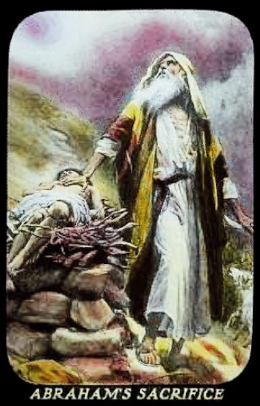
The promise that God made to Abraham for his faithfulness has many beautiful and exciting dimensions. One aspect to that promise is that since Abraham’s time, God has seen fit to call out a select group of mankind, sometimes referred to as “the spiritual seed of Abraham”; other times as “the Church class”, and still other times as “the Little Flock”.
Who Are “The Little Flock?”
After stopping Abraham from following through with the sacrifice of his son, God repeated His promise to Abraham:
Genesis 22:17 That in blessing I will bless thee, and in multiplying I will multiply thy seed as the stars of the heaven, and as the sand which is upon the sea shore; and thy seed shall possess the gate of his enemies;
This iteration of God’s promise is especially significant, as it outlines two separate, yet beautiful, categories of blessing. Just as the stars are above the earth, the “stars of heaven” portion of the promise describes a separate, higher promise than the still wonderful promise to the “sand which is upon the sea shore”. This “stars of heaven” portion of the promise is often seen as referring to “the spiritual seed of Abraham” mentioned previously. Paul refers to this “spiritual seed”, represented by “the stars of the heaven” portion of God’s promise, in his letter to the Galatians:
Galatians 3:26 For ye are all the children of God by faith in Christ Jesus.
Galatians 3:27 For as many of you as have been baptized into Christ have put on Christ.
Galatians 3:28 There is neither Jew nor Greek, there is neither bond nor free, there is neither male nor female: for ye are all one in Christ Jesus.
Galatians 3:29 And if ye be Christ’s, then are ye Abraham’s seed, and heirs according to the promise.
In addition to specifying a group of mankind that would be considered Abraham’s spiritual seed, Paul also references the criteria for becoming a member of this group; namely that a prospective member of this group, this “spiritual seed” would be “baptized into Christ” and further “have put on Christ.” To understand better what this means, consider Jesus’ words and actions during his first advent. When describing the criteria that he was searching for in those who would follow him, Jesus gave the consistent answer that he was searching for those who loved God enough to dedicate their lives, or “consecrate” them, to loving God and following His commandments and laws over any thoughts of personal gains or goals in life:
Matthew 16:24 Then said Jesus unto his disciples, If any man will come after me, let him deny himself, and take up his cross, and follow me.
Matthew 16:25 For whosoever will save his life shall lose it: and whosoever will lose his life for my sake shall find it.
The word “life” in verse 25 is Strong’s Greek word 5590, psuche, which carries the thought of more than just life. The RVIC translation of the Bible translates this word as “soul” or “a person’s distinct identity”. When considered in this context, Jesus’ meaning becomes clearer. Membership in “the spiritual seed of Abraham” requires that one allows God’s laws, commandments and love to transform one’s life, one’s very identity, into something pleasing to God instead of something pleasing to the world, or one’s own selfish ambitions. Instead, Jesus gave instructions to use him as an example:
John 13:15 For I have given you an example, that ye should do as I have done to you.
“The spiritual seed of Abraham”, is also referred to as “the Little Flock”. When considering this name, consider how, at various places in the scriptures, Jesus is referred to as a lamb, and occasionally as “the Lamb of God:
John 1:29 The next day John seeth Jesus coming unto him, and saith, Behold the Lamb of God, which taketh away the sin of the world.
Also consider that when describing the requirements for membership in this class, Jesus declared that these requirements would so stringent that a comparatively few of mankind would understand and accept them. Jesus compared the full acceptance of these terms as entering a “strait gate”, and further compared the lifelong process of following through with the commitments of a consecrated life to God as a “narrow way”:
Matthew 7:14 Because strait is the gate, and narrow is the way, which leadeth unto life, and few there be that find it.
Combining, then, these two thoughts, the “spiritual seed of Abraham” can thus also be described as a “little flock”. Little, because the requirements for this class are very difficult, and few out of mankind will respond to it in sufficient fashion. A “flock” because this group seeks to emulate the nature, actions and heart condition, to the best of their abilities, of Jesus, “the lamb of God”. A group of lambs is accurately labeled “a flock”. The “little flock”, then, represents that group of people that have been called forth by God to His service. More than that, they have answered the call, and devoted their lives, their very “distinct identities”, their “psuche”s, to follow Jesus’ example in living a life consecrated to God.
However, the development of this type of devotion, the type of devotion that is able to fully trust in God regardless of what may happen, is not something that many inherently possess to a sufficient degree as to immediately be considered worthy of the rewards promised to this class. For most, the development of the heart and mind requires experiences and work over the course of a lifetime. Since the new consecrated mind exists side-by-side with the old, human mind, and since experiences are necessary for growth in faith, the prospective members of “the Little Flock” are subject to trials, temptations, and even fears.
Fears of The Prospective Members of the Little Flock
If fear is an inherent part of being human, necessary for growth, and at times even vital to survival, yet consecrated hearts are supposed to have total faith in God, how do those who are striving to become members of the “Little Flock” determine the differences between a healthy fear and an unhealthy fear?
In the article “Perfect Through Suffering” (R1806-1808), Charles Russell tackles the issues of discouragement and fear amongst the prospective members of the “Little Flock” or “Church class” with, appropriately enough, an examination of the head of the “Little Flock”. In this article, Brother Russell considers a time when Jesus himself experienced fear; but as one would expect from a perfect example, this fear was an entirely appropriate type of fear. Jesus was very aware that he had taken on a human form, and, if he allowed himself, would be open to the same temptations and failures as any of mankind. As the time of his great sacrifice approached, our Master felt a very specific fear:
“When the Lord came to the last night of his earthly life, then it was that the questions came to his mind with increased force, Have I thus far done everything in exact accordance with the will of God? and now, in full view of the agony it will cost, am I able to drink the bitter cup to its very dregs? Can I endure, not only the physical agony, but also the ignominy and shame and cruel mockings? and can I do it all so perfectly as to be entirely acceptable with God in my own righteousness? Can I endure to see my disciples scattered and dismayed and my life-work apparently destroyed, my name and the cause of God covered with infamy, and my enemies triumphant and boastful? Such was our Lord’s last conflict.
Doubtless the powers of darkness were busy in that awful hour, taking advantage of the circumstances and of his weakness and weariness to discourage his hope and to fill his mind with fears that after all he should fail, or had failed to do the work acceptably, and that a resurrection therefore was by no means certain. No wonder that even the perfect human heart sank before such considerations, and that an agony of emotion brought great drops of bloody sweat. But did he yield to the discouragement and give up the struggle when the crucial test was thus upon him? No; he took these human fears to his Heavenly Father…” R1806-1807
Because the “servant is not above the master” (John 15:20), all those seeking to follow Jesus’ example are subject to this same fear. Those who understand God’s requirements understand how high the standard is. The command to give up all earthly hopes and gains in dedicated service to God, while still in an imperfect body, is not an easy course. Such a narrow way is truly difficult, and fear of failing in that course is not only appropriate, but essential. As he continues his writings, Brother Russell comments on this fear on behalf of Jesus’ followers:
“This fear on the Lord’s part was not a sinful fear: it was a fear such as we also who are striving to walk in his footsteps are told to have, lest we fail to realize the precious promises vouchsafed to us upon conditions that are positive and unalterable. (Heb. 4:1.) It was a fear begotten, not of doubt of the Father’s ability and willingness to fulfil all his promises, but of a knowledge of the righteous principles which must in every case govern the Father’s course of action, of the inflexible law which righteously affixed the reward of eternal life and glory to his fulfilling of his covenant of sacrifice, while at the same time he began to realize that of himself as a human being, though perfect, his heart and flesh would fail unless reinforced by divine grace.” R1807:1
When reviewing one’s progress in “the narrow way”, it is often appropriate to be dissatisfied with the progress one has made. Satisfaction implies that one is pleased with the current state of affairs, and thus there is no reason for further movement, work or change. Those who understand that the process of adjusting one’s entire being, one’s psuche, to follow the example of Jesus, understand that this process is a lifelong labor with no time for resting upon satisfaction. Being dissatisfied with the current level of one’s progress is therefore essential to progress, insofar as it drives one to further action. Dissatisfaction with one’s knowledge of the scriptures should propel one to commit further time and effort toward study. Dissatisfaction with the results of the time we find ourselves spending in God’s service should spark the desire to reach out and try different approaches to service. Dissatisfaction with the amount of time we find our thoughts being consumed by the cries of modern culture should propel us to see the emptiness of many of these cries, and instead utilize the many resources available to us to increase our time and fellowship with the other prospective members of the “Little Flock”.
Dissatisfaction without action, however, is not only unproductive, but also dangerous to one’s progress in the “narrow way”. Without taking action on the deficiencies that cause dissatisfaction, a healthy dissatisfaction can fall into a very unhealthy discouragement. Discouragement, as opposed to dissatisfaction, can often prevent one from further action. Discouragement whispers that the standard is too high, and the competition too difficult for one so weak and unworthy. Discouragement gnaws at the desire to increase one’s service by dwelling on past failures and weaknesses as too great or too unforgivable. Discouragement erodes the understanding that God has provided us with a lifetime with which to transform our “psuche’s”, and undermines our confidence in our Master’s willingness and ability to act as our advocate when we fail to live up to the standard God has set.
Discouragement is the soft deceptive stillness of inaction that often precedes the full storm of fear. Just as one needs to be sensitive to the stillness before a storm and move to safety before the storm erupts, one needs to be sensitive to that still inactivity caused by discouragement, and take action. Fear of failing in one’s commitments to God should thus drive prospective members of the “Little Flock” to continuously reflect upon and be dissatisfied with their progress, but marshal that dissatisfaction to drive them to more dedicated works in God’s service, and not to give into the fears that accompany discouragement.
Because the process of developing one’s faith is a process, the prospective members of the “Little Flock” are still subject to all the fears common to the remainder of the human race. Fear of death. Fear of losing a loved one. Fear of sickness for oneself or one’s loved one. Fear of pain. Fear of persecution. Fear caused by doubt. Fear caused by indecision. Fear caused by false accusations and falsities masquerading as truths. These are the fears that are appropriate for the prospective members of the “Little Flock” to put behind them and to entrust into the hands of God.
When a child has difficulties in life that are fearful, it is, perhaps natural for the child to reach out to their father for love, protection and support during the trial of the fearful time. When those who desire to be members of the “Little Flock” need protection during their spiritual journey, it is natural and appropriate to cry out to God as their spiritual Father for love, protection and support.
God as a “Father”
When considering who may refer to God as their “Father”, the scriptures are extremely clear in identifying the one for whom it is most appropriate to claim that honor. There is no greater authority than God Himself in all matters. Consider, then, His own words on the subject:
Matthew 3:16 And Jesus, when he was baptized, went up straightway out of the water: and, lo, the heavens were opened unto him, and he saw the Spirit of God descending like a dove, and lighting upon him:
Matthew 3:17 And lo a voice from heaven, saying, This is my beloved Son, in whom I am well pleased.
This relationship between God and Jesus is clearly and simply declared in other scriptures as well:
I John 4:15 Whosoever shall confess that Jesus is the Son of God, God abideth in him, and he in God.
John 3:16 For God so loved the world, that he gave his only begotten Son, that whosoever believeth on him should not perish, but have eternal life.
The scriptures also declare abundant examples of Jesus reverencing and referring to God as his Father:
Matthew 10:32 Whosoever therefore shall confess me before men, him will I confess also before my Father which is in heaven.
Matthew 10:33 But whosoever shall deny me before men, him will I also deny before my Father which is in heaven.
These verses from Matthew are significant, in that not only does Jesus affirm his relationship with God as his Father, but he also touches on the requirements that Jesus looks for in those for whom he is willing to act as a representative or advocate to God. “Confessing Jesus” is the work of the prospective members of the “Little Flock”. The word “confess” is Strong’s Greek word 3670 and translates as “covenant” or “acknowledge” or “a promise”. The “Little Flock” is separated out from the majority of mankind because they have consecrated all that they have to God, just as Jesus did. From this perspective, a “confession” of Jesus by such a class extends beyond simple words or outward expressions. A “confession of Jesus” hearkens back to the promise, or commitment, that they made to God, that they would work to transform their very identities, their “psuche’s” into something pleasing to God.
Jesus was also clear about the type of relationship he would have with this class. The scriptures record an incident where Jesus’ mother and family came to see him while he was preaching to a great crowd. When told that his family had arrived to see him, Jesus took the opportunity to make situation “a teachable moment” by responding with the words:
Luke 8:21 And he answered and said unto them, My mother and my brethren are these which hear the word of God, and do it.
Jesus emphasized that he held such love in his heart for those who strove to obey God as he did, that he considered them his brethren or his family. Over the centuries, many of heard of God to varying degrees. Jesus, however, added that it would take more than just knowing of God or hearing some of His word for Jesus to consider one a member of his family. That wonderful consideration is reserved for those who also “do it”; those who understand and love the word of God so much that they allow it to overtake every concern in their lives, to transform their very “psuche”s. These are the class who truly consecrate their lives to serving God. If Jesus considered God to be his Father, and if Jesus considered those who were earnestly striving to do God’s will as his “brethren”, it is reasonable to consider that these earnestly striving consecrated ones could consider God as their “Father” as well.
As an example of this thought, consider how Jesus responded when certain of his disciples approached him and asked him how to pray. Jesus responded with the well-known words:
Luke 11:2 And he said unto them, When ye pray, say, Our Father which art in heaven, Hallowed be thy name. Thy kingdom come. Thy will be done, as in heaven, so in earth.
Although some translations do not include the word “Our” in Jesus’ words, the meaning is still clear. Jesus instructed his disciples, who had left their previous lives in order to follow him and dedicate their lives to God, to open their prayers with “Father”.
Paul emphasizes this relationship between the consecrated prospective members of the “little flock” and God in his letter to the Romans:
Romans 8:10 And if Christ be in you, the body is dead because of sin; but the Spirit is life because of righteousness.
Romans 8:14 For as many as are led by the Spirit of God, they are the sons of God.
Romans 8:16 The Spirit itself beareth witness with our spirit, that we are the children of God:
Romans 8:17 And if children, then heirs; heirs of God, and joint-heirs with Christ; if so be that we suffer with him, that we may be also glorified together.
In these verses, Paul lays out a simple and clear equation that reinforces and highlights the thoughts that Jesus called out earlier. For those who would be members of “the Little Flock”, an act of consecration is necessary. This act is only possible through faith in the sacrifice that Jesus made on one’s behalf. Mankind is learning the lesson that no matter how hard one may try, imperfection will creep into the hearts and deeds of all. It is impossible for any of mankind to perfectly please God. The only way to thus approach God is through faith in Jesus. That faith, and that act of consecration brings with it the “Spirit of life”, the “Spirit of God”, the “Holy Spirit” into the hearts and minds of the consecrated. Those who allow this Holy Spirit to be received in their hearts and minds, and devote their lives to working with it to transform their minds, hearts and characters to please God, are thus considered “children of God”.
This dovetails Jesus’ words that those who seek to please God through consecration are considered his “brethren”. Paul refers to this, in verse 17, pointing out that those who are considered children of God are “joint-heirs with Christ”. This relationship, then, allows those prospective members of the “Little Flock” to call out upon God as “Father”, just as their master, Jesus, invited them to.
The thought of being able to pray to and trust in God as one’s Heavenly Father is certainly a comforting thought to those prospective members of the “Little Flock” during times of encroaching fear. That comfort and assurance can be even more amplified when one reflects on what the Heavenly Father considers good.
What Is Pleasing and Good to God
Since God is a divine being, it is generally understood that He exists on a different plane than mankind and the world we live on. Mankind bases much of its knowledge on the ability to perceive things with one’s senses. Those who have been blessed with understanding have come to know that since mankind cannot directly perceive God with their inherent senses, God has chosen to reveal Himself to mankind through the Bible. As such, when attempting to understand the question of, what does the Heavenly Father consider good, it is reasonable to expect the scriptures to provide an answer.
In any book, fiction or non-fiction, the author generally attempts to use their first few words or sentences to capture the readers’ attention and, in many cases, set the tone for the work in general. With this thought in mind, consider the significance of one of the very first sentences of the Bible:
Genesis 1:4 And God saw the light, that it was good: and God divided the light from the darkness.
One of the very first words of the Bible is “good”. During the description of the creative process, the word “good” is repeatedly used; seven times alone in the first chapter of Genesis. As the chapter concludes with the creation of mankind, the scriptural account describes God looking over all He had created, and it was after He created mankind that a qualifier is added to God’s feeling about His creation. God, who is infinitely wise and who cannot in any sense err, found His creation to be “very good.” As we look at the people in the world around us, how much should our thoughts and actions reflect that God, who we seek to please, looked back on the creation of mankind, before there even was a “Little Flock”, and considered mankind not just good, but “very good?” If God then considered mankind as a whole to be “very good”, how much more, then, does God look upon those who are diligently seeking to serve Him by answering His call to consecrated service?
Although the words were written before the calling to the “Little Flock” was open, Psalm 116 gives an insight into God’s feelings about this group of mankind:
Psalm 116:15 Precious in the sight of the LORD is the death of his saints.
The word “saint” has taken on different meanings across different branches of Christianity. As used here, it is Strong’s Hebrew word 2623, which carries with it the thought of “godly” or “good”. Although the humbleness of many who are seeking to walk the “Narrow Way” can cause a reluctance to apply this description to themselves, one who has truly dedicated their lives to God and has allowed His word and His Holy Spirit to begin to transform their hearts, minds and actions, can reasonably be considered, by any definition, “godly”. Although such may fail at times, the transformative effect of God’s word upon their lives could accurately be described as “good”.
Consider the magnitude of the words of Psalm 116. Genesis indicates that God considered mankind, in general to be not just “good” but “very good.” Psalm 116 adds a further thought to that; that among all that “very good” of mankind, God considers those who have consecrated their lives to Him, His “saints”, to be “precious.” Something that is “precious” is especially valuable, and can thus be expected to be specially cared for and tended after.
To highlight this thought, consider the words of Paul in his letter to the church at Rome:
Romans 8:28 And we know that all things work together for good to them that love God, to them who are the called according to his purpose.
Those who have been “called according to His purpose” are, again, those who have been called to dedicate their lives to Him and become prospective members of the “Little Flock”. Here, Paul delivers a profound thought to this group. They will have all things – not just “all things that happen to them individually”, but “all things” – work together for their good.
This does not mean that those who have been called by God to His service should expect only easy lives, free of doubt or pain or even fear. The work of progressing into an acceptable member of the “Little Flock” is a lifetime work. The new mind that seeks to only serve God is still housed together with the old mind that seeks to selfishly serve itself and its own interests. There will be times when the latter overtakes the former, and causes doubt which can inevitably give way to fear. At such times, it can be difficult to remember that while God may not have caused the event, He will grant one the strength to endure if one seeks and recognizes His guidance. The experience will ultimately work out to one’s benefit as promised; even when that outcome is difficult to see.
One Final Scene to Picture
So…
When the way seems too narrow… when we are buffeted by waves of fear for ourselves and our families as when Abraham was confronted by Pharaoh or we are disheartened by our lack of developed faith as when Abraham later fell to the same fear when confronted by Abimelech… when the icy and sharp spray of doubt washes over the decks of our protections and we begin to shiver with thoughts of how unworthy we have been and how many times we have fallen short of the vows we have made and how in our distress we begin to speculate that surely we must have fallen so far behind that we cannot possibly keep up, let alone recover…. when dissatisfaction falls into discouragement and discouragement gives way to fear …when that fear flashes out like lightning across the dark waters we find ourselves adrift in… when we find our very voices choking on the winds of our distress and stinging spray of our trial…
…. When all these things assail us, that is the very time to reach out and grab hold of the certainty that He who we are privileged to call Father, beyond all understanding, is always with us. That is the exact moment to cling to the fact that He who looked upon the expanse of His creation and considered it good, and then looked at mankind and considered them “very good”, looks on His called ones and considers them, above all, “precious” to Him. That is the time to grasp firmly to the sure knowledge that our Master does not sleep. He is present and he considers all who seek to serve his Father in like fashion as him, his very brethren; and just like no one of us would turn away from our brothers or sisters, neither will he turn away from us who earnestly seek to reflect his character and follow his teachings. Listen past the winds of discouragement that tear at our thoughts and feel past the spray of fear that drenches our hearts in its icy grasp.
Listen across the expanse of the centuries, to the words of our Master to his disciples and know, down to your very core, that these words are meant for you as well, who have consecrated your all, your very psuche to Him who we are privileged to call Father. Hear the echo of our Master’s words and allow them to calm the storm we find ourselves adrift in, in no less a miraculous fashion than when the Master stretched out his hand and calmed the physical raging wind and silenced the violent churning water.
Hear that one simple sentence…that one simple promise:
Luke 12:32 Fear not, little flock; for it is your Father’s good pleasure to give you the kingdom.
 State College Bible Students