Introduction and Recap
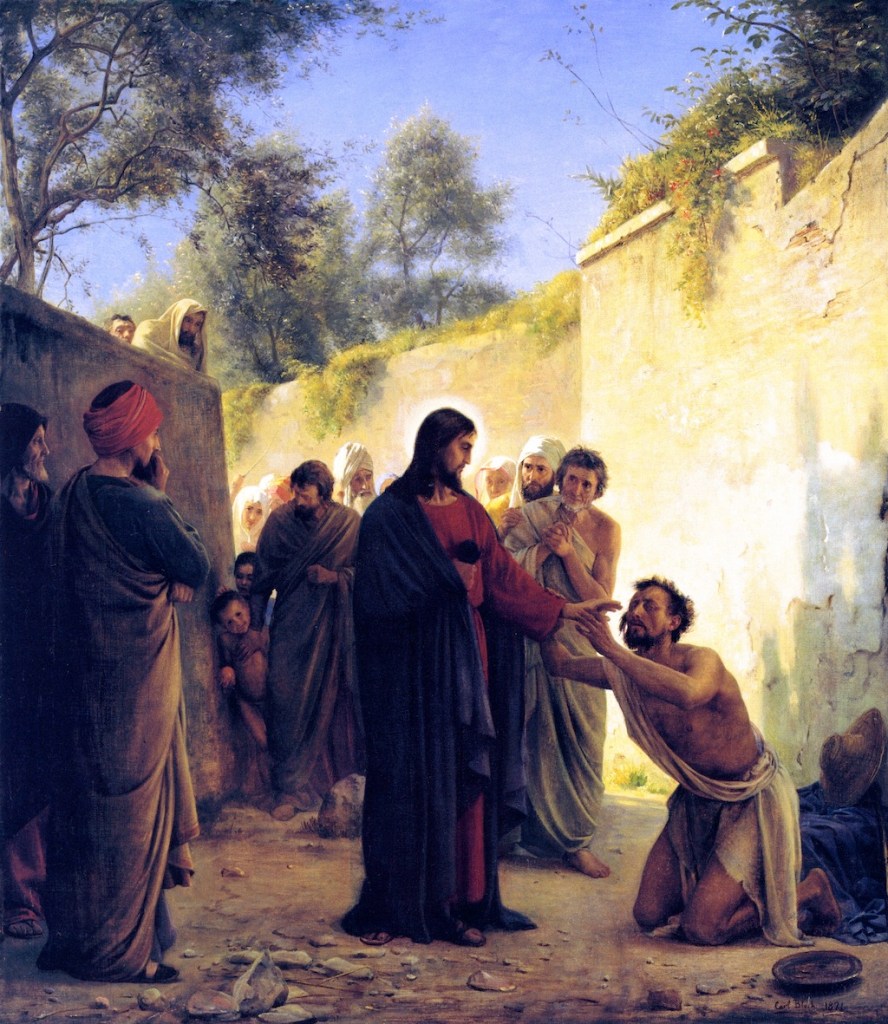
John chapter 9 describes one of the miracles that Jesus performed during his ministry on earth. After an encounter with a group of Pharisees, who were the religious leadership of the Jewish people at the time, Jesus and his disciples came upon a man who had been blind from birth. After forming some clay and applying it to the man’s eyes, Jesus instructed the man to wash himself in a certain pool. Upon following Jesus’s instructions, the man found that he could see. In our last study on these events, we reflected on how Jesus may have used this situation and the rather elaborate process of healing the man’s blindness as an opportunity to illustrate certain points about himself and his purpose. As we rejoin our study on John 9 and the healing of the blind man, the scriptures center their focus on the blind man and those who knew him.
Brought Before the Pharisees – John 9:8-13
As might be expected, the people who knew the healed man soon noticed the results of the miracle that had been performed on him. Some of his neighbors, who surely knew the man very well, even questioned whether the healed man was the same man who they knew so well:
John 9:8 The neighbours therefore, and they which before had seen him that he was blind, said, Is not this he that sat and begged?
John 9:9 Some said, This is he: others said, He is like him: but he said, I am he.
Asking the obvious question regarding how his sight was healed, the healed man very quickly gave credit to Jesus:
John 9:10 Therefore said they unto him, How were thine eyes opened?
John 9:11 He answered and said, A man that is called Jesus made clay, and anointed mine eyes, and said unto me, Go to the pool of Siloam, and wash: and I went and washed, and I received sight.
John 9:12 Then said they unto him, Where is he? He said, I know not.
Not understanding what had happened, the people, some of whom were the man’s neighbors, brought the healed man before the religious leadership, the Pharisees:
John 9:13 They brought to the Pharisees him that aforetime was blind.
Ailments such as blindness were often viewed by the Pharisees, and thus by the people in general, as a result of divine punishment for sin. This thought is exemplified in the disciples’ question to Jesus in John 9:2. Perhaps beyond a straightforward non-comprehension of the man’s healing itself, the people may had perhaps, over the years of the man’s life, developed an opinion about the man based on this belief, and could not understand how his “sin” was suddenly taken away. Whether this actually contributed to the people bringing the man before the Pharisees or not, the thought of Jesus washing away one’s “sin,” both real and perceived is a beautiful one.
Healing on the Sabbath – John 9:14-17
John 9:14 reminds us that Jesus healed the man on the Sabbath:
John 9:14 And it was the sabbath day when Jesus made the clay, and opened his eyes.
According to Jewish law, no work was allowed to be done on the Sabbath day. This law was, in part, based on God’s law given to the people of Israel centuries earlier, as recorded in Exodus 35:2-3. Over the intervening years, the religious leadership, of which the Pharisees were the iteration at the time, had interpreted the laws that God gave, adding details to them as the generations passed. These interpretations and details had become as important as God’s law itself, to the point where few separated the two. Interpreting God’s law “for the people” and adding details to its keeping, was a source of power for the Pharisees, and any questioning of either this authority or the interpretations of the law angered the Pharisees. The keeping of the Sabbath was an example of the strict adherence to every detail surrounding the law.
When the Pharisees asked the man how he regained his sight, the man quickly and truthfully responded that Jesus had healed him:
John 9:15 Then again the Pharisees also asked him how he had received his sight. He said unto them, He put clay upon mine eyes, and I washed, and do see.
Given that Jesus’s confrontation with the Pharisees, leading up to the man’s healing, had happened in the temple (John 8:2) and that Jesus healed the man outside the temple, it is reasonable to conclude that at least some of the Pharisees who were now judging the man were among the same Pharisees who had been part of the earlier confrontation with Jesus. Instead of rejoicing in the miracle of the man’s restored sight, at least some of the Pharisees were instead concerned that the rules regarding the Sabbath may have been broken by the healing:
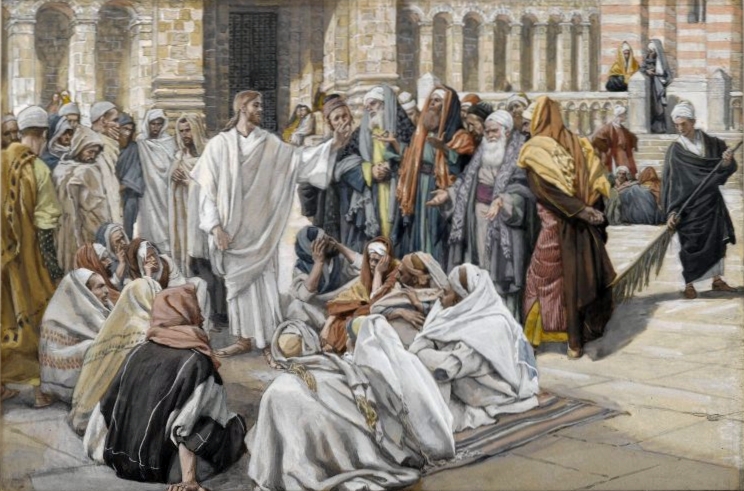
John 9:16 Therefore said some of the Pharisees, This man is not of God, because he keepeth not the sabbath day. Others said, How can a man that is a sinner do such miracles? And there was a division among them.
Love of Ritual Above Love of Man, and Even Love of Jesus
John 9:16-17 record there was a “division among them.” The “them” seems to refer to the Pharisees themselves. Verse 17 records that some of the Pharisees recognized the miracle, and concluded that Jesus must be a prophet:
John 9:17 They say therefore unto the blind man again, What sayest thou of him, in that he opened thine eyes? And he said, He is a prophet.
Some, however, concluded that Jesus was not “of God” because he performed a work (healing) on the Sabbath (verse 16). This also contributed to the division, as some reasonably concluded that it would be impossible for a “sinner” to perform such a miracle.
The hardness of heart that concluded Jesus to be a “sinner” for healing on the Sabbath was central to the confrontation that Jesus had with the Pharisees earlier in the temple. Jesus undoubtably knew it was the Sabbath when he healed the man. He also undoubtably knew that the man would be brought before the Pharisees after his healing, and that at least some of the Pharisees would have this exact reaction.
A lesson that can be taken from this experience is as applicable to us today as it was then, even though we may not be Jewish and many long centuries have passed. Interpretations and rituals have been built up across not just the Jewish faith, but across Christianity as well. Each follower of Jesus has a responsibility to follow Jesus’s law of loving one’s neighbor as oneself (Matthew 22:39). Each follower of Jesus must answer in their own hearts whether they choose to love ritual, details and human-defined rules to the point of not recognizing the very Lord that they profess to serve or the actual lessons that he demonstrated and taught.
A Fear that Divides a Family – John 9:18-23
Regardless of the debate among the Pharisees, a significant portion of the people did not believe the miracle of the man’s healing. In some ways, this may be understandable, as great acts, especially miraculous ones, are often met with skepticism and demand proof before acceptance. Because of this, the people demanded the man’s parents to be called before them:
John 9:18 But the Jews did not believe concerning him, that he had been blind, and received his sight, until they called the parents of him that had received his sight.
John 9:19 And they asked them, saying, Is this your son, who ye say was born blind? how then doth he now see?
Notice that verse 18 specifies this group of people as “the Jews.” This at least implies that the group was more than just the Pharisees, but potentially consisted of both the Pharisees and the Jewish people in general. Consider that a group of people brought the man to the Pharisees in the first place. Many of these people were no doubt still on the scene, awaiting the Pharisees’ judgement on the matter, and may have been part of the group labeled as “the Jews.”
Imagine for a moment that you had a child who had been born with a condition such as blindness. Imagine how you must have felt as your neighbors and even religious leadership may have unjustly judged him as a sinner as he begged outside the temple. Then one holy Sabbath, against all expectations, his sight is healed! Imagine the emotions that you would feel as your child witnessed the world for the first time!
The reaction of the man’s parents, however, was quite different than this:
John 9:20 His parents answered them and said, We know that this is our son, and that he was born blind:
John 9:21 But by what means he now seeth, we know not; or who hath opened his eyes, we know not: he is of age; ask him: he shall speak for himself.
The man’s parents attempted to separate themselves from the miracle that had been performed on their son. Moreover, their words seemed to speak of a desire to distance themselves from their son himself, abandoning him to “speak for himself.” This may seem a somewhat harsh course for a parent to take, and the next verses reveal the reason why his parents responded as they did:
John 9:22 These words spake his parents, because they feared the Jews: for the Jews had agreed already, that if any man did confess that he was Christ, he should be put out of the synagogue.
John 9:23 Therefore said his parents, He is of age; ask him.
Jesus taught the importance of obedience and reverence of God (Matthew 22:37) that came from a love for Him and His ways, which have only a good and positive impact to those who love Him (Romans 8:28). The Pharisees held their traditions about the Sabbath to such a degree of importance that some of them labeled the miraculous healing of one of their congregation a sin (John 8:16). They exerted such an unyielding hold of authority of the people they, in reality, were meant to serve, that these parents distanced themselves from their own child. This should have been an occasion of rejoicing for all.
Jesus’s encounters with the Pharisees, that culminated in the blind man’s healing, began in John chapter eight, when a group of Pharisees brought a woman to Jesus who was accused of adultery. The Pharisees proposed to Jesus that according to the Law, the woman should be stoned (John 8:4-5). Jesus pointed out the hypocrisy behind this desire (John 8:7-11). Every Christian is responsible for their own actions, and needs to decide who they will follow. A blind following of leadership that seems contrary to Jesus’s teachings and God’s loving laws can lead to negative consequences, such as the separation between parent and child.
Hearts that Revile a Miracle – John 9:24-29
Perhaps because of his parents’ words, the man was called before the Pharisees yet again. This time, the tone of the encounter was much more accusatory, and for those who follow Jesus, even shocking:
John 9:24 Then again called they the man that was blind, and said unto him, Give God the praise: we know that this man is a sinner.
John 9:25 He answered and said, Whether he be a sinner or no, I know not: one thing I know, that, whereas I was blind, now I see.
Whether this was the exact same group of Pharisees as had questioned the man earlier, or just a subset of them, is not clearly stated. However, the scriptures do clearly state that this time around, the group started out by accusing Jesus of being a sinner. Given the discussions chronicled in John 9:16, it is reasonable to conclude that they applied this label to Jesus because of their perception of him breaking the Sabbath by healing the man.
Rather than engage in an argument, the man responds with the simple fact that his vision was healed. Perhaps trying to drive home their point that they considered the act of healing a breaking of the Sabbath, the Pharisees repeated their questioning again:
John 9:26 Then said they to him again, What did he to thee? how opened he thine eyes?
John 9:27 He answered them, I have told you already, and ye did not hear: wherefore would ye hear it again? will ye also be his disciples?
The man’s frustration can be sensed in his response. However, the response of the Pharisees was even more telling about the condition of their hearts:
John 9:28 Then they reviled him, and said, Thou art his disciple; but we are Moses’ disciples.
John 9:29 We know that God spake unto Moses: as for this fellow, we know not from whence he is.
In these words, one can sense the derision that was in the hearts of the Pharisees. Having studied the scriptures and the prophecies more than the average person, one might expect the Pharisees to have been among the first to recognize their long-awaited Messiah and King by the miracles he performed. The attitude of heart that would cause one to “revile” a person for having received a miracle instead of rejoicing with them is the hypocritical heart condition that Jesus was cautioning against.
Standing Firm for One’s Healer – John 9:30-34
Perhaps having reached the limits of his patience, the man responded to the Pharisees with some very stern words:
John 9:30 The man answered and said unto them, Why herein is a marvellous thing, that ye know not from whence he is, and yet he hath opened mine eyes.
John 9:31 Now we know that God heareth not sinners: but if any man be a worshipper of God, and doeth his will, him he heareth.
John 9:32 Since the world began was it not heard that any man opened the eyes of one that was born blind.
John 9:33 If this man were not of God, he could do nothing.
In his response, the man makes a very reasonable argument to contradict the Pharisees’ accusations against Jesus. By his argument, the man asks the Pharisees how many times any man had been known to be able to heal the sight of one who had been blind, as he had been. The man rightfully calls out that such a miracle can only have been performed by one who was sent by God and had His backing and, through Him, power. The man ends his argument with a very simple yet extremely powerful statement, that if Jesus were not sent by God, he could not have healed the man’s sight. Further, if Jesus was sent by God, then he could not possibly, by definition, be labeled a sinner.
The Pharisees found that they had no defense from this argument, which infuriated them even further:
John 9:34 They answered and said unto him, Thou wast altogether born in sins, and dost thou teach us? And they cast him out.
In these words, the Pharisees resorted to casting negative accusations on the man’s character, falling back on the long-held belief that since the man had been born blind, either he or his parents must have committed some terrible sin, and that the man’s blindness was God’s punishment (John 9:2). The man’s response was a direct threat to their authority over the people, because the man’s argument was in disagreement with their own judgement, yet could not be reasonably countered. Since they could not use reason, they resorted to anger, and punished the man by casting him out of the temple.
Jesus’s Judgement – The Truly Blind – John 9:35-41
Upon hearing that the man had been cast out of the temple, Jesus went out to find the man and to talk to him:
John 9:35 Jesus heard that they had cast him out; and when he had found him, he said unto him, Dost thou believe on the Son of God?
To those who follow Jesus’s teachings today, the thought of our Lord taking the time to specifically seek one out to talk to them is a profoundly humbling one. The act spoke to Jesus’s character. Whereas the Pharisees responded to the healed man with derision and anger, Jesus took the time to seek him out and interact with him in an entirely different manner. Consider the tone of Jesus’s questioning of the man as opposed to the tone taken by the Pharisees:
John 9:35 Jesus heard that they had cast him out; and when he had found him, he said unto him, Dost thou believe on the Son of God?
John 9:36 He answered and said, Who is he, Lord, that I might believe on him?
John 9:37 And Jesus said unto him, Thou hast both seen him, and it is he that talketh with thee.
John 9:38 And he said, Lord, I believe. And he worshipped him.
Here, then, is the beauty of Jesus’s teachings, that through them, the true love of God is revealed. Jesus gained the man’s faith through healing, through love, and through acceptance. These are the traits that reveal Jesus to be exactly who he claimed to be, the Son of God, who was sent to heal the world (John 3:17-18).
Some of the Pharisees were present when Jesus found the man and were witness to the exchange between them. Jesus took the opportunity to drive home the lesson that he endeavored to teach through this whole encounter:
John 9:39 And Jesus said, For judgment I am come into this world, that they which see not might see; and that they which see might be made blind.
John 9:40 And some of the Pharisees which were with him heard these words, and said unto him, Are we blind also?
John 9:41 Jesus said unto them, If ye were blind, ye should have no sin: but now ye say, We see; therefore your sin remaineth.
Summary – What Do Our Hearts Cling To?
Although Jesus was doubtlessly concerned for the Pharisees and the conditions of their hearts and minds, it is reasonable to conclude that he knew he may not be able to change them, at least not at that time. If this thought is true, then the lesson that Jesus taught may have also been intended for a different audience as well. Jesus, no doubt, understood that the call to follow him would continue on for centuries after his death, and that his followers, such as us today, would hear and cling to the lessons he taught. The healing of the blind man, and the subsequent situations that happened because of it, comprise an entire chapter of the Bible. Consider, also, that the lesson that Jesus strove to teach through this occasion actually began earlier, in John chapter eight. This means that this lesson was so important that it comprises not one, but two books of the Bible. As such, the encounter, and the lessons of our Lord, seem important for his followers to reflect on.
In John chapters eight and nine, certain of the Pharisees were exposed as having hearts and minds that stood in judgement of their fellow people. Rather than respond with joy at the healing of one in need, they responded with anger and derision. This type of anger, fueled by their love of the respect and authority given to them by the people, caused a “blindness,” or blind rage, in the Pharisees, and in some of the people as well. It “blinded” them to the beauty of the miracle that had been performed, and the teaching of love and healing that lay behind the miracle.
Each Christian is responsible for the development of their own hearts and actions. As imperfect human beings, we all experience anger at one time or another, and we all can be “blind” to what may later be obvious. This is one reason why it is vitally important to study the Bible, and to understand the teachings of Jesus not just on a surface level, and not just to the extent that they fit into our own personal opinions. Jesus’s teachings are in harmony with God who sent him, and we should never stop working toward making our own hearts and actions reflect our Lord and, like the healed man who silenced the Pharisees with truthfulness and reason, should not allow any leadership to fill our hearts with feelings that are contrary to God’s loving and just laws.
Joshua 24:15 And if it seem evil unto you to serve the LORD, choose you this day whom ye will serve; whether the gods which your fathers served that were on the other side of the flood, or the gods of the Amorites, in whose land ye dwell: but as for me and my house, we will serve the LORD.
Further Readings and References
- For over 25 years, the Christian Questions radio show/podcast has, in one form or another, examined topics and questions that, in large part, are submitted by members of the listening audience. Each week, a different topic or question is examined through the lens of reason and the scriptures. The two-part study on John 9 makes several observations about the Pharisees, who were the religious leadership at the time of Jesus’s first advent. Jesus’s relationship with the Pharisees is the subject of this two part study by Christian Questions, and is highly recommended to any who may have found value in our study of John 9:
- What Did Jesus Really Think of the Pharisees? (Part I)
- What Did Jesus Really Think of the Pharisees? (Part II)
- (NOTE: Episodes of the Christian Questions podcast are also available on Spotify)
 State College Bible Students