Introduction
What would you do if you knew your life were drawing to a close? This question, in one form or another, has been a source of contemplation and reflection for mankind. For Jesus, the answer to the question was simple. He would continue to serve his Father and follow His laws.
As a Jew, Jesus was obligated to take part in a yearly observance known as the Passover. Thus even though Jesus was aware that those who considered themselves his enemies were plotting his death, Jesus instructed his followers to arrange a place for them all to observe the coming Passover:
Luke 22:1 Now the feast of unleavened bread drew nigh, which is called the Passover.
Luke 22:2 And the chief priests and scribes sought how they might kill him; for they feared the people.
Luke 22:7 Then came the day of unleavened bread, when the passover must be killed.
Luke 22:8 And he sent Peter and John, saying, Go and prepare us the passover, that we may eat
During the Passover observance, Jesus gave a set of instructions to his followers, which are appropriate for all of Jesus’s followers, even today, to keep. These instructions are to serve as a memorial for our Lord, who soon after that last Passover meal, would willingly sacrifice his life on behalf of his followers and on behalf of all mankind.
What is “the Passover?”
Before considering Jesus’s memorial instructions, consider first the Passover itself. As chronicled in Genesis 47, Abraham’s grandson, Israel, moved his household into the land of Egypt due to a long-lasting famine. After Israel’s death, his household multiplied in number, but remained in Egypt:
Exodus 1:7 And the children of Israel were fruitful, and increased abundantly, and multiplied, and waxed exceeding mighty; and the land was filled with them.
During this time, the Egyptians became increasingly dependent on the Israelites, and also conversely began to treat them poorly:
Exodus 1:8 Now there arose up a new king over Egypt, which knew not Joseph.
Exodus 1:9 And he said unto his people, Behold, the people of the children of Israel are more and mightier than we:
Exodus 1:10 Come on, let us deal wisely with them; lest they multiply, and it come to pass, that, when there falleth out any war, they join also unto our enemies, and fight against us, and so get them up out of the land.
Exodus 1:11 Therefore they did set over them taskmasters to afflict them with their burdens. And they built for Pharaoh treasure cities, Pithom and Raamses.
Exodus 1:12 But the more they afflicted them, the more they multiplied and grew. And they were grieved because of the children of Israel.
Exodus 1:13 And the Egyptians made the children of Israel to serve with rigor:
Exodus 1:14 And they made their lives bitter with hard bondage, in mortar, and in brick, and in all manner of service in the field: all their service, wherein they made them serve, was with rigor.
When the proper time came, God determined that the Israelites should move out of Egypt and into the land that He had promised to their forefather Abraham.
Exodus 3:7 And the LORD said, I have surely seen the affliction of my people which are in Egypt, and have heard their cry by reason of their taskmasters; for I know their sorrows;
Exodus 3:8 And I am come down to deliver them out of the hand of the Egyptians, and to bring them up out of that land unto a good land and a large, unto a land flowing with milk and honey; unto the place of the Canaanites, and the Hittites, and the Amorites, and the Perizzites, and the Hivites, and the Jebusites
Exodus 3:9 Now therefore, behold, the cry of the children of Israel is come unto me: and I have also seen the oppression wherewith the Egyptians oppress them.
Exodus 3:10 Come now therefore, and I will send thee unto Pharaoh, that thou mayest bring forth my people the children of Israel out of Egypt.
However, the Egyptian rulership repeatedly determined that the Israelites would not be permitted to leave their country. In response to these repeated denials, God caused a series of plagues across Egypt, the first nine of which are chronicled in Exodus chapters seven through ten. Although terrible, each of these plagues was ultimately unsuccessful in swaying the Egyptian leadership to allow the Israelites to leave Egypt.
A final plague, more catastrophic than the rest, was declared in Exodus chapter eleven. All of the firstborn in the land of Egypt would die unless the Israelites were allowed to leave the country. The Egyptian leadership again refused. At the appointed hour, the scriptures describe this terrible plague sweeping across Egypt, taking the life of each firstborn. However, the firstborn of the descendants of Israel were spared from this devastating curse. The Israelites alone were given a special set of instructions which, if followed, would cause death to pass over their households, providing safety for their firstborn.
The Details of the Passover
God’s instructions to the Israelites regarding what would become known as “the Passover” are recorded in Exodus chapter twelve.
Exodus 12:3 Speak ye unto all the congregation of Israel, saying, In the tenth day of this month they shall take to them every man a lamb, according to the house of their fathers, a lamb for an house:
Exodus 12:4 And if the household be too little for the lamb, let him and his neighbor next unto his house take it according to the number of the souls; every man according to his eating shall make your count for the lamb.
Exodus 12:5 Your lamb shall be without blemish, a male of the first year: ye shall take it out from the sheep, or from the goats
Exodus 12:6 And ye shall keep it up until the fourteenth day of the same month: and the whole assembly of the congregation of Israel shall kill it in the evening.
Exodus 12:7 And they shall take of the blood, and strike it on the two side posts and on the upper door post of the houses, wherein they shall eat it.
Exodus 12:8 And they shall eat the flesh in that night, roast with fire, and unleavened bread; and with bitter herbs they shall eat it.
Exodus 12:9 Eat not of it raw, nor sodden at all with water, but roast with fire; his head with his legs, and with the purtenance thereof.
Exodus 12:10 And ye shall let nothing of it remain until the morning; and that which remaineth of it until the morning ye shall burn with fire
Exodus 12:11 And thus shall ye eat it; with your loins girded, your shoes on your feet, and your staff in your hand; and ye shall eat it in haste: it is the LORD’s passover.
Exodus 12:12 For I will pass through the land of Egypt this night, and will smite all the firstborn in the land of Egypt, both man and beast; and against all the gods of Egypt I will execute judgment: I am the LORD.
Exodus 12:13 And the blood shall be to you for a token upon the houses where ye are: and when I see the blood, I will pass over you, and the plague shall not be upon you to destroy you, when I smite the land of Egypt
Thus, by sacrificing a “lamb without blemish” and applying its blood to the doorways of their houses, the Israelites were able to have the curse of death “pass over” their households, sparing the lives of their firstborn. In addition, they were to prepare for a long journey. They were also to prepare and eat the sacrificed lamb, which would provide them energy to begin their journey. The Israelites were instructed to prepare for a journey because this incident not only provided salvation for their firstborn, but would provide them salvation from their state of captivity. As a result of this final terrible plague, the Egyptian leadership finally agreed to allow the Israelites to leave Egypt:
Exodus 12:30 And Pharaoh rose up in the night, he, and all his servants, and all the Egyptians; and there was a great cry in Egypt; for there was not a house where there was not one dead.
Exodus 12:31 And he called for Moses and Aaron by night, and said, Rise up, and get you forth from among my people, both ye and the children of Israel; and go, serve the LORD, as ye have said.
God subsequently instructed the Israelites to remember this period of salvation of their firstborn from death, and salvation from their captivity from death each year. This period of time was to become known as the “Passover.”
Exodus 12:24 And ye shall observe this thing for an ordinance to thee and to thy sons for ever.
Exodus 12:25 And it shall come to pass, when ye be come to the land which the LORD will give you, according as he hath promised, that ye shall keep this service.
Exodus 12:26 And it shall come to pass, when your children shall say unto you, What mean ye by this service?
Exodus 12:27 That ye shall say, It is the sacrifice of the LORD’s assover, who passed over the houses of the children of Israel in Egypt, when he smote the Egyptians, and delivered our houses. And the people bowed the head and worshipped.
Jesus, the Passover Lamb
The need for deliverance from Egypt and the salvation from the tenth terrible plague apply to the Israelites alone. However, God has structured the Bible such that certain incidents are pictures or even predictions of other, usually broader concepts or events. The events that serve as the picture are sometimes referred to as “types” and the broader events that are pictured are sometimes referred to as “antitypes.” Although the “type” of the Passover has applicability only to the Israelites, the Passover’s “antitype” has an application to the entirety of mankind.
Due to the disobedience of the first man and woman, Adam and Eve, each generation of mankind has been subject to the punishment of death:
Genesis 3:17 And unto Adam he said, Because thou hast hearkened unto the voice of thy wife, and hast eaten of the tree, of which I commanded thee, saying, Thou shalt not eat of it: cursed is the ground for thy sake; in sorrow shalt thou eat of it all the days of thy life;
Genesis 3:18 Thorns also and thistles shall it bring forth to thee; and thou shalt eat the herb of the field;
Genesis 3:19 In the sweat of thy face shalt thou eat bread, till thou return unto the ground; for out of it wast thou taken: for dust thou art, and unto dust shalt thou return.
Just as the Israelites multiplied in Egypt, yet were ultimately unable to escape the oppression of the Egyptians, mankind has also multiplied over the many generations since Adam and Eve. However, every person in every generation could not escape the sentence of death, “returning to the dust from which they came.”
In time, however, God provided a way out of this sentence of death. As outlined in Leviticus and Deuteronomy, God delivered a series of laws to the Israelites. Life was promised to any who could perfectly keep these laws:
Leviticus 18:5 Ye shall therefore keep my statutes, and my judgments: which if a man do, he shall live in them: I am the LORD.
This presented two problems, however. First, the laws were only delivered to the Israelites, thus they didn’t provide a means to salvation to the majority of mankind. Second, being imperfect humans, none of the Israelites could perfectly keep God’s laws, and thus could not attain salvation from death through them.
In time, however, God’s son, Jesus, having taken the form of a man, and also being an Israelite (or, a Jew) was able to perfectly keep God’s law and earn a right to life. This perfect obedience is described by the Apostle Paul:
Philippians 2:8 And being found in fashion as a man, he humbled himself, and became obedient unto death, even the death of the cross.
By sacrificing his perfect life, Jesus balanced the scales of God’s justice, that had been unbalance by Adam’s disobedience. Paul succinctly summarizes this balance:
I Corinthians 15:21 For since by man came death, by man came also the resurrection of the dead.
I Corinthians 15:22 For as in Adam all die, even so in Christ shall all be made alive.
I Corinthians 15:23 But every man in his own order: Christ the firstfruits; afterward they that are Christ’s at his coming.
Examining Jesus’s sacrifice further, there seems to be a correlation between Jesus and the sacrifice of his perfect life as a means to provide salvation from death, and the Passover lamb’s blood and body to provide a means of providing first a means of salvation from death for the firstborn, and second, providing a means of escape from an otherwise inescapable state of captivity.
Salvation Type One: The Firstborn
For those who see it and choose to follow its requirements, Jesus’s sacrifice provides a means of salvation from death for those who, like him, choose to dedicate their present lives to serving God. Jesus referred to this path as a “narrow way,” because the requirements would be strict:
Matthew 7:13 Enter ye in at the strait gate: for wide is the gate, and broad is the way, that leadeth to destruction, and many there be which go in thereat:
Matthew 7:14 Because strait is the gate, and narrow is the way, which leadeth unto life, and few there be that find it.
Following this path in life requires one to prioritize serving God above any personal ambitions in life. This single-minded purpose in life, which would not be recognized or even accepted by all, was emphasized by the Apostle Paul:
Philippians 3:13 Brethren, I count not myself to have apprehended: but this one thing I do, forgetting those things which are behind, and reaching forth unto those things which are before,
Philippians 3:14 I press toward the mark for the prize of the high calling of God in Christ Jesus.
Notice that Paul’s words indicate that this prize is for those who follow a “high calling,” and that further this “high calling” is in Christ Jesus. The “prize” is a salvation from death in the form of a heavenly state of being, currently given to our Lord Jesus:
I John 3:2 Beloved, now are we the sons of God, and it doth not yet appear what we shall be: but we know that, when he shall appear, we shall be like him; for we shall see him as he is.
The trying and selection of this group of individuals must be accomplished first, before the remainder of mankind can be restored. Consider the words of Paul, that the “whole creation,” which includes the entirety of mankind, waits (perhaps unknowingly) for the completion of this class:
Romans 8:22 For we know that the whole creation groaneth and travaileth in pain together until now.
Romans 8:23 And not only they, but ourselves also, which have the firstfruits of the Spirit, even we ourselves groan within ourselves, waiting for the adoption, to wit, the redemption of our body.
Paul’s words also refer to those who seek salvation by answering this higher, heavenly calling as having “the firstfruits of the Spirit.” Likewise, I John 3:2 refers to this same group as being “sons of God.” These thoughts bring to mind the events of the original Passover, when the blood of a lamb provided salvation to the firstborn of Israel. In like fashion, Jesus’s sacrifice, the blood he willingly shed, provides salvation to those who devote their lives to following him. Because of this, when speaking to a group of those who have devoted their lives to following Jesus, Paul refers to Jesus as their “Passover lamb.”
I Corinthians 5:7 Purge out therefore the old leaven, that ye may be a new lump, as ye are unleavened. For even Christ our passover is sacrificed for us:
I Corinthians 5:8 Therefore let us keep the feast, not with old leaven, neither with the leaven of malice and wickedness; but with the unleavened bread of sincerity and truth.
Salvation Type Two: The Remainder of Mankind
The profound nature of Jesus’s sacrifice also extends to the entirety of mankind. As examined previously, Jesus’s sacrifice balanced the scales of God’s justice which were unbalanced by Adam’s disobedience. Because of this balancing, mankind will, at the appropriate time in God’s plan, have the opportunity to be restored to their previous condition of human perfection. This process is referred to as “restitution” in the Bible. The Apostle Peter referred to this restitution that would come to all mankind, as well as this restitution being a future event:
Acts 3:20 And he shall send Jesus Christ, which before was preached unto you:
Acts 3:21 Whom the heaven must receive until the times of restitution of all things, which God hath spoken by the mouth of all his holy prophets since the world began.
Jesus’s sacrifice on behalf of all mankind, is sometimes referred to as a “ransom price.” A ransom price is an equal and corresponding price, one thing for another. In this case, the perfect life of Jesus is the ransom price for the perfect life of Adam. Notice the use of the word “ransom” in the following scriptures, and also that the “testimony” of this ransom, namely the restitution of mankind from death, will be a future event:
I Timothy 2:5 For there is one God, and one mediator between God and men, the man Christ Jesus;
I Timothy 2:6 Who gave himself a ransom for all, to be testified in due time.
This future time of restoration is referred to Isaiah chapter 35, when the “ransomed of the Lord” (the restored mankind) will be freed from all sorrow, pain and death:
Isaiah 35:10 And the ransomed of the LORD shall return, and come to Zion with songs and everlasting joy upon their heads: they shall obtain joy and gladness, and sorrow and sighing shall flee away.
This wonderful time of restoration is also described in Revelation chapter 21:
Revelation 21:3 And I heard a great voice out of heaven saying, Behold, the tabernacle of God is with men, and he will dwell with them, and they shall be his people, and God himself shall be with them, and be their God.
Revelation 21:4 And God shall wipe away all tears from their eyes; and there shall be no more death, neither sorrow, nor crying, neither shall there be any more pain: for the former things are passed away.
Thus, just like the events of the Passover facilitated the Israelites release from captivity in Egypt, Jesus’s sacrifice also releases mankind from the captivity of the death sentence incurred generations ago by Adam’s sin of disobedience. It was, therefore, understandable that John the Baptist declared Jesus to be the “lamb of God”:
John 1:29 The next day John seeth Jesus coming unto him, and saith, Behold the Lamb of God, which taketh away the sin of the world.
Jesus Institutes the Memorial
Jesus was aware of his role in fulfilling his Father’s plan for mankind. He also knew that the time of his death was fast approaching (Matthew 26:1-2). However, Jesus placed a high degree of importance upon sharing his last Passover observance with his disciples. The account of their final Passover observance together is recorded in Matthew 26:17-29, Mark 14:12-26 and Luke 22:7-20.
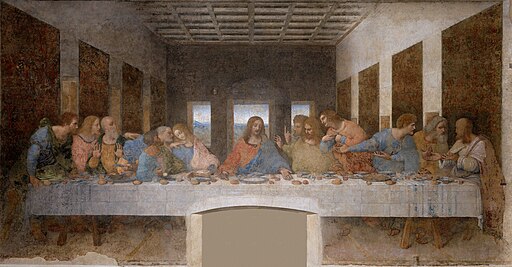
As Jesus ate the Passover meal with his disciples, he did two things. First, he took a piece of bread from the table, broke it into pieces, and gave the following instruction:
Luke 22:19 And he took bread, and gave thanks, and brake it, and gave unto them, saying, This is my body which is given for you: this do in remembrance of me.
After the bread, he then took a cup of wine from the table and gave the following further instruction to his disciples:
Luke 22:20 Likewise also the cup after supper, saying, This cup is the new testament in my blood, which is shed for you.
Jesus is sometimes referred to as “the antitypical Passover lamb.” The scriptures declare that Jesus’s sacrifice is the sole means of salvation for his followers today, and for the entirety of mankind in the future. In the Passover type, the lamb’s blood provided salvation from death for the firstborn. In the antitype, Jesus’s blood, shed from his willing sacrifice, provides salvation from death for those who dedicate their lives to follow him in consecrated service to God; the “firstfruits of the Spirit”. Jesus’s use of a cup to symbolize his shed blood harmonizes with this type and antitype relationship.
Likewise, in the Passover type, the lamb’s body provided the sustenance and means for the remainder of the Israelites to escape the captivity of Egypt. Likewise, in the antitype, Jesus’s perfect body, broken during his great sacrifice and represented by the broken bread, provides the way for the remainder of mankind to escape the sentence of death incurred by Adam’s sin. Surely, Jesus is the Passover lamb that takes away the sin of the world.
The instructions for the Passover, and for the keeping of the Passover during the years afterward, were given by God to the Israelites alone. Thus, it would not be proper for non-Jewish people to keep the Passover. However, Jesus’s instructions for his remembrance were given to his followers, his disciples. This remembrance is therefore to be kept by all who consider Jesus to be their salvation and Lord. Although it is always appropriate to remember and reflect on Jesus’s sacrifice and what it means to us personally, regardless of where we are in our lives, and to further reflect on its meaning to the whole of mankind in general, following Jesus’s instructions to perform this memorial ceremony with cup and bread seems particularly appropriate during the Passover season. Not only does it reflect the time frame of the events of those long centuries ago, when our Master drew together in an upper room with those who he considered closest to him, but it also, perhaps, helps us to remember the magnitude of his sacrifice, both on a personal level and on a wider level.
Conclusion
Jesus enjoyed a perfect and glorious pre-human existence as God’s only begotten son (John chapter 1, John 3:16). He exhibited such a strong obedience to God that they shared a single will (John 10:30). Mankind, on the other hand, fell into disobedience and sin beginning with the very first man and woman. Even when offered a way out of the just sentence of death that had been cast upon them, mankind was still unable to break free of sin and unable to keep God’s laws perfectly, and thus were still unable to break free from the captivity of death.
Nevertheless, because of his great love and obedience, Jesus left his heavenly state and became a man. Further, he did what no man had ever done. By keeping God’s law perfectly, he earned a right to life in the greatest and most perfect arena of justice – God’s justice. Yet, he knowingly and willingly let himself be captured, taunted, maligned, beaten and ultimately put to death in an almost unimaginably painful and cruel manner. As we reflect on the magnitude of Jesus’s sacrifice and all the things he endured on our behalf, it is appropriate to look at our own lives and reflect on our own sins and shortcomings. It is appropriate to consider what we are giving up in service to God, whether from our time or our talents or our resources or whatever we may have. We cannot offer a perfect sacrifice like Jesus did. However, we can live our lives reflecting on our Lord’s sacrifice and evaluating our every day, and in so doing, take that one further step along the narrow way.
 State College Bible Students