The period of God’s plan for mankind sometimes referred to as the Gospel Age begins roughly at the time of Jesus’ life and sacrifice. From that point forward, the Gospel message of Jesus’ sacrifice and the redemption it brings for all mankind (past, present and future) became the focal point of the relationship between God and mankind. As covered in previous studies, this age centered around a subset of mankind (a “little flock” – Luke 12:32) that understood that Jesus’ sacrifice provided mankind with two paths to salvation. The majority of mankind, stretching all the way back to Adam and Eve, will, after being resurrected from death to life, have the future opportunity to come into harmony with God, and in so doing, gain everlasting life. However, a smaller group has the opportunity to enter into harmony with God now, during their present lives (Matthew 7:13). By remaining faithful to vows of dedicated, consecrated service to God, this “little flock” or “church class” (Ephesians 2:19-22, Romans 12:5) strives for a higher, heavenly reward. Thus, before the general resurrection and restitution of mankind can begin, the full number of Christ’s church class (those who respond to the “high calling” to consecration – Philippians 3:14) must have the opportunity to demonstrate their “faithfulness unto death” (Revelation 2:10). The ending of the Gospel Age, referred to as the Gospel Age Harvest period, is therefore a time to gather together those who, throughout the centuries, answered the “high calling” and been found worthy of their vows. After their gathering, sifting and judging, these faithful ones will at last receive the reward for which they sacrificed so much.
Briefly Revisiting the Parable of the Wheat and Tares
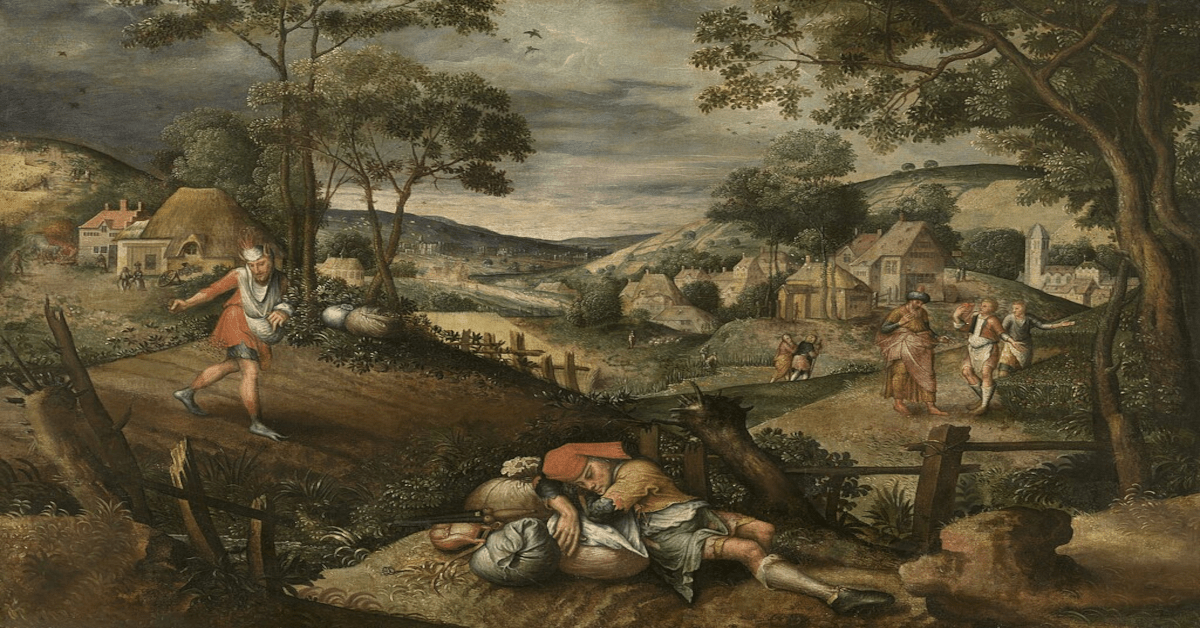
Matthew 13:24-30 record Jesus’s well-known parable of the wheat and the tares (covered in a previous study). In this parable, Jesus describes a man planting wheat in a field. While the man slept, his enemy came and planted tares, a type of weed, among the wheat in his field. Since young wheat and young tare plants look similar, the man ordered that both plants should be left to grow until harvest time. Then, when wheat and tares could easily be judged as different, they could be separated. The wheat would be gathered and stored in the barn, while the tares would be gathered and burned.
One interpretation of this parable is that the wheat represents Christ’s true church, who spent their lives in heartfelt dedication to God. The tares (weeds which resemble wheat) represent those who outwardly professed to love God and follow Jesus, but continued to pursue selfish worldly pursuits at the expense of serving God. The growing season of the wheat and the tares is the Gospel Age, in which all manner of people heard about God and Jesus, and had an opportunity to grow in Jesus’ likeness. The owner of the field instructs his servants to let the wheat and the tares grow together until harvest time, to protect the wheat from accidental cutting. Once they have had time to fully develop, their true nature will be obvious.
God’s word would go out to mankind for a time (the Gospel Age), with the specific purpose of developing a group of “more than overcomers” (Romans 8:37) ahead of the general restitution of all mankind. In harmony with this thought, when that time period elapsed, a judging and gathering would have to take place, similar to the agricultural activity of a harvest. The New Testament teaches, in several places, first, that the harvest period will be at the end of the Gospel Age, and second, the returned Jesus will be present during this time (sometimes referred to as Christ’s second coming, or more appropriately translated, Christ’s second presence). At this time, the gathered Church, tested and judged worthy, will receive their reward – the attainment of the same divine state of existence granted to their Head, the glorified Jesus.
Christ’s At His Coming
I Corinthians 15:22 For as in Adam all die, even so in Christ shall all be made alive.
I Corinthians 15:23 But every man in his own order: Christ the firstfruits; afterward they that are Christ’s at his coming.
In these two verses, the Apostle Paul delivers a beautifully succinct summary of some of the fundamental truths of God’s plan for mankind. Verse 22 states a simple equation explaining the answers to many questions that people, even Christians have struggled with for centuries. Why do people die? Why do people call Jesus “the redeemer?” Is death final? Does mankind have any hope? What hope to the people who lived their lives never knowing God or Jesus? God originally created the first man and woman, Adam and Eve, in His image (Genesis 1:27). Since God is perfect, His image must also therefore be perfect. Mankind was intended to live forever, under the condition that they obey God’s laws. Because of disobedience, Adam and Eve were sentenced to death (Genesis 3:17-19). This penalty carried through the generations of their descendants; thus, “in Adam all die.” Jesus sacrificed his perfect life to balance the scales of God’s justice; a perfect life (Jesus) for a perfect life (Adam). Jesus’ sacrifice will ultimately provide restitution for all mankind; thus, in Christ shall all be made alive.
Verse 23 continues this thought, adding an important qualifier. The general resurrection of mankind to a perfect, earthly existence (the “restitution” of the condition of existence lost due to Adam and Eve’s disobedience – Acts 3:20-21), and the heavenly reward promised to the faithful overcomers of the Church are separate and distinct. Looking at some of the surrounding verses, Paul is specifically addressing those in the Church (see verse 18 for example). Thus, he doesn’t mention the future, general restitution of mankind in verse 23. Since his subject is those “who have fallen asleep in Christ” (the Church members who have finished their course and are sleeping in death), he simply mentions Christ as the first to be resurrected (see verse 20 also) and after him, those judged worthy to be members of the Church (“they that are Christ’s”).
The final phrase of verse 23 pins the time of the resurrection and rewarding of the Church to the Gospel Age harvest period. As examined in study 19, Christ’s return, although unrecognized by the majority of mankind, even by the majority of Christendom, occurred at the end of the Gospel Age. The word translated as “coming” by the King James translation is Greek word 3952 in Strong’s Concordance, “parousia” can also more appropriately be translated as “presence.” To summarize, those judged to be found worthy of inclusion in Christ’s church will be resurrected and gathered to him during his invisible presence at the end of the Gospel Age, fulfilling the main purpose of the Gospel Age harvest.
Meeting the Lord
I Thessalonians 4:16 For the Lord himself shall descend from heaven with a shout, with the voice of the archangel, and with the trump of God: and the dead in Christ shall rise first:
I Thessalonians 4:17 Then we which are alive and remain shall be caught up together with them in the clouds, to meet the Lord in the air: and so shall we ever be with the Lord.
These two verses, along with their surrounding context, are extensively covered in an earlier study on this site regarding symbolic language. For the purposes of this study, note a few items that are in harmony with the thoughts of I Corinthians 15:22-23. In verse 16, the Church (“the dead in Christ”) are again described as being resurrected ahead of the rest of mankind (“shall rise first” – “first” indicating that there will be future “risings”). “The Lord” referred to in these verses is the glorified, returned Jesus (verse 16 refers to “the trump of God,” clearly indicating that the Lord cannot be God Himself). Thus, here again, the scriptures teach that the Church will be resurrected when Jesus is present (during the “harvest” at the end of the Gospel Age). Verse 17 describes the Church as meeting their Lord, and being forever with him. This is a beautiful description of the Church receiving their reward of the likeness (the same level or type of existence) of their Head and Master.
The Marriage of the Lamb is Come
Revelation 19:6 And I heard as it were the voice of a great multitude, and as the voice of many waters, and as the voice of mighty thunderings, saying, Alleluia: for the Lord God omnipotent reigneth.
Revelation 19:7 Let us be glad and rejoice, and give honour to him: for the marriage of the Lamb is come, and his wife hath made herself ready.
Revelation 19:8 And to her was granted that she should be arrayed in fine linen, clean and white: for the fine linen is the righteousness of saints.
This set of prophetic scriptures describes the time when those who have been judged worthy of their vows of consecration are gathered together with the head of the Church, the glorified Jesus (Colossians 1:18). This is the same gathering as the harvesting of the wheat from the tares and the “dead in Christ” rising to meet their Head and Master.
The “great multitude” of verse 6 pictures the relatively large number, in comparison to the number found faithful to their vows of consecration to God, that, although they did not completely abandon God or seeking to serve him, allowed earthly goals and pursuits to enter their hearts and minds. Although not granted the reward of the Church class, this group will likely be quick to recognize the gathering of the Church, and the closing of the harvest, due to their familiarity with God’s plan. Hence, they may be among the first to rejoice and say “the Lord God omnipotent reigneth.”
Verse 7 describes the “marriage of the Lamb.” The Lamb, of course, represents the glorified Jesus (John 1:29). The “bride” in the marriage picture represents the Church class, finally granted their reward of being with their Lord, as previously examined in 1 Thessalonians 4:17. “Making herself ready” refers to the long years of developing a heart and mind acceptable to God through the execution of the vows of consecration. Having successfully completed lives of sacrifice and service to God, verse 8 compares the justification before God that the Church (the “her” at the beginning of verse 8) receives to a “white robe.” This “robe of righteousness” is the same symbolic robe described in the parable of the wedding feast in Matthew 22:1-14 (see verses 11-12 in particular).
1 John 2:1-2 is addressed to the Church and describes Jesus’ willingness to first act as an “advocate” for them before God, then as a “propitiation” for sins. Note how verse 2 makes a distinction between the sins of those in the Church and sins of the world (“also for the sins of the whole world”). “Advocate” is Greek word 3875 in Strong’s Concordance, and means “an intercessor.” “Propitiation” is Strong’s Greek word 2434 and means “atonement.” The thought, then, of Revelation 19:8 is that Jesus’ advocacy for the shortcomings of those in the Church during their imperfect lives “covers” them like a robe and makes them blameless and spotless before God. Verse 9 also describes the robe as being made “of fine linen” which is compared to “the righteousness of the saints.” “Saints” is Greek word 40 in Strong’s Concordance, meaning sacred, pure, or blameless. The “saints” are thus again the Church, judged worthy and gathered together during the Gospel Age harvest. The righteousness imputed to them by Jesus’ sacrifice, rewarded to them for their lifetime of righteous service to God, thus separates them from the “great multitude,” and identifies them as Christ’s bride.
The Parable of the Drag Net
Matthew 13:47-50 records Jesus’ parable of the dragnet. Jesus describes a net that is cast into the sea, and when it is pulled back out onto the shore, it contains all types of fish. The fish are evaluated, and the good, desirable fish are gathered together into storage and the undesirable fish are thrown away.
Like the parable of the wheat and the tares, this parable may be interpreted as a picture of the gathering and judgement of the Church at the end of the Gospel Age. In this interpretation, the dragnet represents God’s calling throughout the Gospel Age. Many people have responded to this call in the centuries since Jesus’ death. Many have responded with good and sincere hearts and minds. Others initially responded, perhaps, with all sincerity, but over time, allowed the cares, teachings and priorities of the world to draw them away from their vows to serve God with all their hearts and minds. Still others may have responded to God’s call without sincerity, for selfish reasons known only to themselves, but without any intention of sacrificing their earthly pursuits to serve God. The first group, who responded to God’s calling with sincere hearts and lives, represent the good fish, who are gathered from the net and stored. The second two groups, who either let their service to God lapse (forgetting their “first love” – Revelation 2:4) or who had no intention of truly living up to God’s standard, represent the bad fish, who are thrown away.
This parable teaches of a time of judgement, not for all mankind (yet), but for those who responded to God’s “high calling” to the Church (Philippians 3:14). This period of judgement occurs when the net is pulled from the sea to the shore, representing the end of the Gospel Age. The opportunity to be “caught in the net” is over. Again, this judgement at this time is not on all mankind, only on those who professed to answer God’s call during the Gospel Age. As will be covered in future studies, all mankind will be resurrected and have the future opportunity to become in harmony with God.
What About Those Who Were Not Judged Worthy in the Harvest?
Being found worthy of the prize of the high calling demands the sacrifice of worldly goals and ambitions in favor of those things which please God (Psalms 50:5). The standard for worthiness is very high, and the judgement is God’s alone to make. Some will be judged unworthy, because even though they start their consecrated lives with all sincerity, they allow themselves to be drawn back to the world throughout their lives, thus offering less than a complete sacrifice. This group may find themselves removed from the final gathering of the Church class. However, God, in His mercy, will not completely abandon this group, but instead grants them mercy. As covered in a previous study, this group is sometimes referred to as “the great multitude” (as examined earlier in Revelation 19:6) or “the great company.”
After the parable of the dragnet ends, Jesus speaks of “severing the wicked from the just,” casting the wicked into “a furnace of fire,” and that there will be “wailing and gnashing of teeth” (Matthew 13:50-51). The first phrase seems fairly straightforward. The purpose of a harvest is to separate the good from the bad, and the harvest is a time when those who are judged faithful in their vows to God will be separated from those who have not, and be granted their reward.
“Weeping and gnashing of teeth” describes the poignant pain and disappointment felt by those who are judged not worthy of the reward of the Church. Imagine a time when you committed to something. That commitment was known to all those who knew you. However, when the time came for the results of your commitments to be judged, imagine that it was discovered that you were unfaithful in your responsibilities. Instead of working on the priorities you committed to, a review of your activities revealed slothfulness and insincerity. Imagine, then, that because of your own actions, you missed out on the rewards for having fulfilled your obligations. Christians who consecrate their lives to God, who take a lax view of their commitment, run the risk of hearing Jesus, their Master, say “I know you not” (Matthew 7:22-23). This regret and sorrow is the “weeping and gnashing of teeth” that will be felt by those who miss the mark of the High Calling.
God provides a mercy class for these failed ones, as previously studied, in the “great company.” Notice that although Matthew 13:51 describes these as being cast into “a furnace of fire,” it does not indicate that they are destroyed. The “furnace of fire” is symbolic language for a time of great trouble at the end of the Gospel Age harvest period (this “time of trouble” will be covered more in depth in the next study). Although this time of trouble will be difficult and unpleasant, the endurance of it by the great company class is not meant as a punishment. Instead, it will have a purification effect. Those who were once lax in their vows will learn the importance of obedience to God. This class, and their purification, is described in Revelation 7:13-15. The “great tribulation” in verse 14 is the same as the “furnace of fire” of Matthew 13:51. Note the different time frames in the experiences of the great company between the two sets of scriptures. Matthew 13:50-51 describes the separation of the faithful Church class from the not-faithful-enough Great Company class, as well as the following sorrow of the latter class. Revelation 7:13-15 describes the Great Company, sometime after their purification in “the great tribulation.” Note how Revelation 7:15 describes the purified Great Company as ultimately having a position above the general resurrected mankind, in that they “are before the throne of God” and “serve him night and day in His temple.”
In Conclusion
The Gospel Age harvest is one of the most dramatic periods of God’s plan for mankind. After thousands of years of developing and executing, many long-running threads at last come to fruition. Long ago, God made an arrangement with a select group of mankind, asking them to be His chosen people. He promised life to any who could perfectly keep His laws in spirit and in deed. Hundreds of years later, Jesus was the only person to earn life under God’s law, but sacrificed that life on behalf of mankind. A new calling opened up, this time to all mankind, to accept Jesus’ sacrifice and follow his example of sacrifice and service to God. The development of the group of people who recognized that calling took thousands of more years, eventually culminating in a gathering and separation of those judged worthy of their vows of sacrifice from those who were not.
The stage is now set for the next phase of God’s plan; a phase which will at last address the remainder of all mankind (Romans 8:22-23). However, any dramatic change, regardless of how good the ultimate outcome will be, will of necessity bring churn. In our next study on God’s plan for mankind, the great “time of trouble” that marks the end of the Gospel Age harvest will be examined. As the old is torn down to make way for the new, difficult times will come into full force, but we are assured that God has all things well in hand.
Isaiah 46:9 Remember the former things of old: for I am God, and there is none else; I am God, and there is none like me;
Isaiah 46:10 declaring the end from the beginning, and from ancient times things that are not yet done; saying, My counsel shall stand, and I will do all my pleasure;
Further Readings and References
The Christian Questions weekly podcast has been airing for over 25 years as a radio show then podcast, providing a wide range of studies on Biblical and Christian topics. Most episodes also include a downloadable “show notes” presentation, which expands on the topics covered in each episode, and provide full scriptural documentation and references for the topics covered. Many of the topics briefly touched on in this study are covered in more detail in episodes of Christian Questions. Some episodes that may be of interest to readers of this study are:
- What Does “Weeping And Gnashing Of Teeth” Mean?
- What Is the Broad Road That Leads To Destruction?
- If Jesus’ Resurrection Saved the World, Why Is It Such a Mess?
- What Is the New Creation?
- When Jesus Prayed, “Thy Kingdom Come” What Did He Mean?
- Am I Throwing Away My Life’s Greatest Privilege? (Part I)
- Am I Throwing Away My Life’s Greatest Privilege? (Part II)
- What if I’m Not Good Enough for Heaven?
- Could Jesus Return Without You Knowing?
- What Does Jesus Expect From Us?
- Jesus Died For You! Are You Dying For Him?
- (Note: the Christian Questions podcast is also available via Spotify)
 State College Bible Students